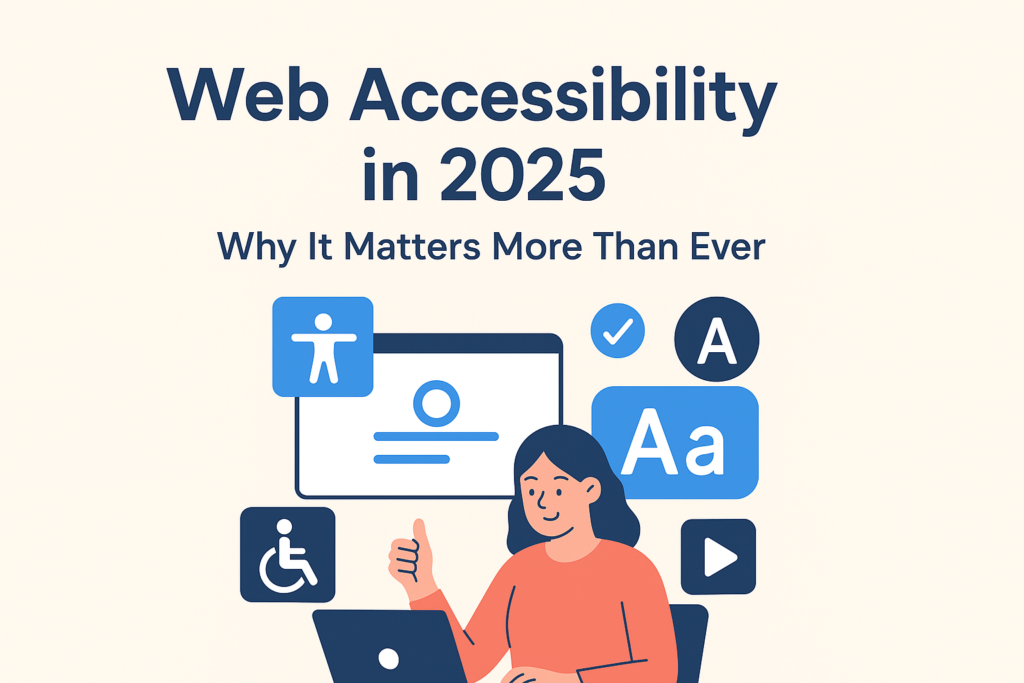
Web Accessibility in 2025: Why It Matters More Than Ever
The web is for everyone. Yet, millions of people with disabilities still struggle to use websites due to poor accessibility practices. In 2025, with stricter compliance laws, inclusive design trends, and user-first approaches, web accessibility is no longer optional — it’s essential.
Here’s how we can make the web more accessible, practical steps you can take, and why it matters for your users and business.
1. Problem Statement
- Many websites remain inaccessible to users with vision, hearing, motor, or cognitive challenges.
- Non-compliance with standards like WCAG 2.2 can lead to legal risks and loss of audience trust.
- Accessibility is often seen as an afterthought rather than a core design principle.
2. Approach to Resolve
- Adopt a “Accessibility First” mindset when building UI/UX.
- Test accessibility at every stage — design, development, and deployment.
- Treat accessibility not as a checklist but as a human responsibility to create equal digital experiences.
3. Tools & Techniques to Follow
- Automated Testing: Use tools like axe, Lighthouse, or Wave to find common accessibility gaps.
- Screen Readers: Test with tools like NVDA, JAWS, or built-in VoiceOver.
- Keyboard Navigation: Ensure all features work without a mouse.
- Color Contrast Checkers: Verify text visibility for users with visual impairments.
- Semantic HTML + ARIA Roles: Provide clear meaning to assistive technologies.
4. Tips to Enhance UX & Engagement
- Readable Content: Keep text simple, scannable, and structured with headings.
- Alt Text for Images: Describe visuals meaningfully, not just “image1.png”.
- Accessible Forms: Use labels, instructions, and error messages that are screen-reader friendly.
- Focus Indicators: Make sure buttons, inputs, and links are visible when tabbed.
- Dark Mode & High Contrast Options: Give users control over readability.
- Inclusive Media: Provide captions, transcripts, and sign-language support for videos.
Conclusion
In 2025, web accessibility is more than a compliance requirement — it’s about building a web without barriers. Accessible websites:
- Reach wider audiences
- Improve SEO and performance
- Show empathy and inclusivity