India-built AI & blockchain engineering since 2017 · Serving clients worldwide

QA, Security & Compliance

Blockchain Testing

Blockchain testing matters more than ordinary QA because deployed contracts are hard to change and bugs can move real money. Speqto tests smart contracts, nodes, wallets and dApps across Ethereum, Solana and other networks, combining unit tests, fuzzing, integration scenarios and performance checks before you deploy.

  • Prototype in weeksProof before big budgets
  • Weekly demosSee progress, not slides
  • You own the codeFull IP assignment
  • 128+ engineersFive offices, three continents

Testing smart contracts properly

We start with unit tests in Foundry or Hardhat covering every function, access rule and revert condition, then add fork tests that run your contracts against real mainnet state. Coverage reports guide gaps, but coverage alone proves little, so tests are written around invariants such as total supply never exceeding a cap. We also test the failure paths on purpose: out-of-gas conditions, failed external calls, paused states and malicious token behavior, since users meet these far more often than the happy path.

Property-based testing and fuzzing with Foundry's fuzzer, Echidna or Medusa generate thousands of unexpected inputs and call sequences. Static analysis with Slither and symbolic tools find reentrancy, arithmetic and authorization flaws. For Solana programs we test with Anchor, Mollusk and Trident-style fuzzing. Gas usage is measured per function and compared across changes, so an innocent refactor cannot quietly make a core operation too costly for ordinary users when the network becomes busy.


Beyond the contract: nodes, wallets and dApps

A product is more than its contracts. We test frontends against local chains such as Anvil or Hardhat Network and testnets, covering wallet connection, network switching, transaction rejection, gas estimation errors, pending and dropped transactions, and chain reorganisations that change what the interface should display. Test accounts with different balances, roles and approval states are scripted, so the interface is checked in the situations that confuse real users, such as insufficient funds or a revoked allowance.

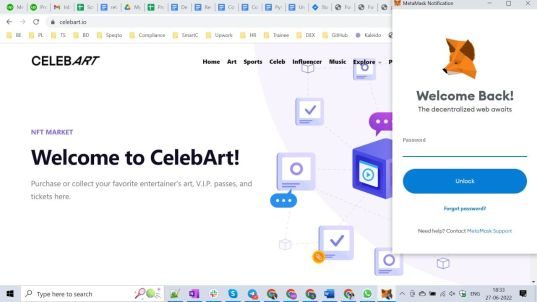
Wallet testing covers key handling, signing prompts, address validation and recovery flows across MetaMask, WalletConnect and mobile wallets. For nodes and private networks we test consensus behavior, peer recovery, upgrade procedures, RPC load and indexer correctness, including subgraphs and event listeners that fall behind. Indexers and event consumers get special attention, because dashboards and balances that lag the chain or double count events after a reorganisation erode trust even when the contracts are correct.

Economic, upgrade and release testing

Many incidents come from economics, not syntax. We simulate adversarial behavior such as flash loans, oracle manipulation, front-running and griefing against your protocol, and test pause, upgrade and migration procedures, including proxy storage layout compatibility and role changes by multisig. Each scenario is expressed as a measurable loss or profit for an attacker, which helps product owners decide whether to add limits, delays, circuit breakers or oracle redundancy.

Before launch we rehearse deployment on a testnet or fork, verify bytecode and constructor arguments, and check monitoring and alerting. Testing reduces risk but does not replace an independent smart contract audit, which we recommend for any contract holding significant value. A written launch checklist covers key custody, multisig signers, timelocks, monitoring and the communication plan for an emergency pause, so the team is prepared before real funds arrive.

What we do

What our Blockchain Testing team delivers

Specific work we do for clients, with the senior people who do it.

  • Smart contract testing

    Unit, integration and fork tests in Foundry or Hardhat covering access control, edge cases, reverts, events and gas behavior for every contract function.

  • Fuzzing and invariants

    Property-based tests with Foundry, Echidna or Medusa that explore unexpected call sequences and check that core protocol invariants always hold.

  • dApp and wallet testing

    Frontend and wallet flows tested on local chains and testnets, including rejected transactions, network switching, signing prompts and delayed confirmations.

  • Node and network testing

    Verification of validators, RPC endpoints, indexers and private networks for consensus behavior, recovery, upgrades and sustained transaction load.

  • Economic scenario testing

    Simulations of flash loans, oracle manipulation, front-running and liquidity shocks against your protocol, with findings expressed in terms of fund exposure.

  • Upgrade and deployment rehearsal

    Dry runs of proxy upgrades, migrations, multisig operations and mainnet deployment scripts on forks, with verification and rollback planning.

Why Speqto

A team you can rely on from the first call

The habits that keep projects calm: clear scope, visible progress and engineers who stay accountable.

  • Building since 2017

    Nine years of shipping web, mobile, AI and blockchain products for startups and enterprises.

  • 128+ engineers

    A bench of senior engineers, designers and QA, so one person leaving never stalls your product.

  • Offices on three continents

    Noida HQ with teams in Surat, London, the US and Ho Chi Minh City for overlapping working hours.

  • AI-first workflow

    AI-assisted coding, testing and reviews speed delivery, with a named human accountable for every merge.

  • Weekly demos

    You see working software every week and can redirect early, long before a release surprise.

  • You own everything

    Full IP assignment, repository access from day one and an NDA before we talk details.

How we deliver

A proven process from idea to scale

Transparent, agile delivery with weekly demos and clear milestones, so you always know what is shipping and why.

  1. 01

    Discover

    Workshops to understand goals, users, data and success metrics.

  2. 02

    Plan

    Architecture, roadmap, estimate and a team shaped to your needs.

  3. 03

    Design

    UX flows, prototypes and technical design validated with stakeholders.

  4. 04

    Build

    Agile sprints with weekly demos, code reviews and automated testing.

  5. 05

    Launch

    Secure deployment, monitoring and a smooth go-live.

  6. 06

    Scale

    Ongoing optimization, new features and support as you grow.

Technology

Tools and platforms for Blockchain Testing

The stack our engineers use on this kind of work every week.

  • Foundry
  • Hardhat
  • ECEchidna
  • MEMedusa
  • Slither
  • ANAnchor
  • TETenderly
  • ANAnvil
  • GAGanache
  • Playwright
  • The Graph
  • OpenZeppelin
Outcomes

What you can expect

Every engagement is tied to measurable business results, not just deliverables.

01

Bugs found before mainnet

Unit tests, fuzzing and scenario simulations expose costly logic and authorization errors while fixing them is still just a code change.

02

Dependable user flows

Wallet, network and transaction edge cases are handled gracefully, which reduces support tickets and abandoned transactions.

03

Safer launches and upgrades

Rehearsed deployments and migrations lower the chance that a routine release becomes an irreversible incident.

FAQ

Blockchain Testing FAQs

Straight answers on cost, timelines, IP ownership, team setup and how we work. Cannot find yours? Ask a solutions architect directly.

Is blockchain testing different from normal software testing?

Yes. Deployed contracts are immutable or hard to upgrade, transactions cost fees and cannot be undone, state is shared and adversarial, and behavior depends on network conditions. That raises the need for invariants, fuzzing and economic scenarios beyond normal functional tests.

Do I still need an audit if my contracts are well tested?

Yes, for contracts that hold meaningful value. Testing by the team that built the code shares its assumptions. An independent audit brings fresh eyes and attack experience. Good tests also make audits faster and cheaper to complete.

What is fuzzing in smart contract testing?

Fuzzing feeds a contract large numbers of random or guided inputs and call sequences while checking properties that must always hold, such as balances adding up. It finds edge cases a human would not write by hand.

Can you test non-EVM chains like Solana or Cosmos?

Yes. For Solana we test programs with Anchor and fuzzing tools, and for Cosmos SDK chains we test modules, IBC flows and upgrade handlers. The principles are the same; the tooling and failure modes differ by network.

Client reviews

Rated 5.0/5 by clients on Clutch

Independent, verified reviews from founders and technology leaders we have worked with. Read them in full on each platform.

“What I found most impressive about Speqto Technologies was their profound technical depth.”

Andrea Daminelli Founder & Co-CEO, Daze Milan, Italy · Blockchain development for an EV charging company
Verified review on Clutch

“The project management throughout this complex undertaking was exceptionally proactive and structured.”

Rostyslav Burylo CEO, Lynksen Lisbon, Portugal · Blockchain development
Verified review on Clutch

“Their ability to translate complex cryptographic concepts into actionable, business-aligned strategies set them apart.”

Oleksandr Sendulskyi Senior Marketing Manager, BINTIME IT Company Ukraine · Blockchain development services
Verified review on Clutch

See all reviews

Have an AI idea or a product to build? Let’s talk.

Tell us what you are building. A solutions architect will respond within one business day with next steps and a no-obligation estimate.

  • Free 30-minute consultation
  • NDA on request, before we talk details
  • Estimate within 3–5 business days
WhatsAppTelegramCall

Tell us what you want to build

A solutions architect replies within one business day. NDA on request.

We reply within one business day. Your details stay confidential.