



Loading...

The TanStack Query Edge: Deep Dive into Advanced Caching for Optimal Application Speed

The TanStack Query Edge: Deep Dive into Advanced Caching for Optimal Application Speed

Shubham Anand

21 November 2025

In the relentless pursuit of seamless user experiences and lightning-fast web applications, data management stands as a formidable challenge. Modern front-end frameworks demand intelligent solutions to handle asynchronous data, and this is precisely where TanStack Query (formerly React Query) distinguishes itself. More than just a data-fetching library, it offers a sophisticated paradigm for state management, with its advanced caching mechanisms forming the very core of its prowess. Unlocking the TanStack Query Edge means mastering these capabilities to achieve truly optimal application speed.

The Imperative of Intelligent Caching in Modern Web Apps

The conventional wisdom of simple data fetching and storage often falls short in dynamic, data-intensive applications. Users expect instantaneous feedback, and every millisecond spent waiting for data impacts engagement and conversion. This is where the profound impact of intelligent caching becomes evident. It’s not just about storing data; it’s about predicting user needs, invalidating stale information precisely, and rendering UIs with a perception of near-zero latency. TanStack Query redefines this landscape by transforming complex caching strategies into an intuitive API.

Diving Deep: TanStack Query’s Advanced Caching Architecture

At its heart, TanStack Query provides a robust, declarative way to manage server state. Its caching model is built upon a few key principles that collectively deliver optimal application speed:

  • Stale-While-Revalidate (SWR) Paradigm: This fundamental strategy ensures that users always see content immediately (even if it’s slightly stale) while the library silently fetches fresh data in the background. This dramatically improves perceived performance and provides a smoother user experience, forming the bedrock of TanStack Query’s approach to advanced caching.
  • Automatic Query Retries & Deduping: TanStack Query intelligently handles network failures by automatically retrying failed queries. Crucially, it also deduplicates multiple requests for the same data, ensuring that only one network call is made, thereby conserving bandwidth and speeding up data retrieval.
  • Garbage Collection & Cache Management: The library automatically garbage collects data that is no longer in use, preventing memory leaks and maintaining an efficient cache. Developers can fine-tune `cacheTime` to control how long unused queries remain in memory before being purged, offering granular control over resource utilization.
  • Declarative Query Invalidation: One of TanStack Query’s most powerful features is its ability to declaratively invalidate queries. When data on the server changes (e.g., after a POST, PUT, or DELETE request), you can instruct TanStack Query to mark relevant queries as stale, prompting a refetch and ensuring the UI reflects the most current server state. This precise control over cache invalidation is key to maintaining data accuracy.

Unleashing the TanStack Query Edge for Peak Performance

Beyond its core caching mechanisms, TanStack Query offers several powerful features that, when leveraged effectively, truly provide the TanStack Query Edge:

  • Optimistic Updates: For actions that modify data, TanStack Query enables optimistic updates. This means the UI is updated immediately, *before* the server responds, providing instant feedback to the user. If the server request fails, the UI can be gracefully rolled back. This creates an incredibly fluid and responsive user experience, crucial for optimal application speed perception.
  • Data Transformations with `select`: The `select` option allows you to transform or pick specific parts of your query data. This not only optimizes data flow by only passing necessary information to components but also memoizes the transformation, preventing unnecessary re-renders and contributing to overall application efficiency.
  • Prefetching: TanStack Query allows you to prefetch data that users are likely to need next, storing it in the cache before they even navigate to the relevant section. This anticipatory fetching eliminates loading spinners and delivers a truly instantaneous experience, a hallmark of advanced caching in action.
  • Infinite Queries: For features like

RECENT POSTS

Reducing Loan Processing Time Through Workflow Automation: What Actually Works

If you’ve spent any time in lending operations, you already know the real cost of a slow loan cycle isn’t just customer frustration — it’s lost business. A borrower who waits 10 days for approval has usually applied with two other lenders in the meantime. We’ve seen this play out repeatedly with our BFSI clients […]

How to Plan a Phased ERP or CRM Implementation Without Breaking What Already Works

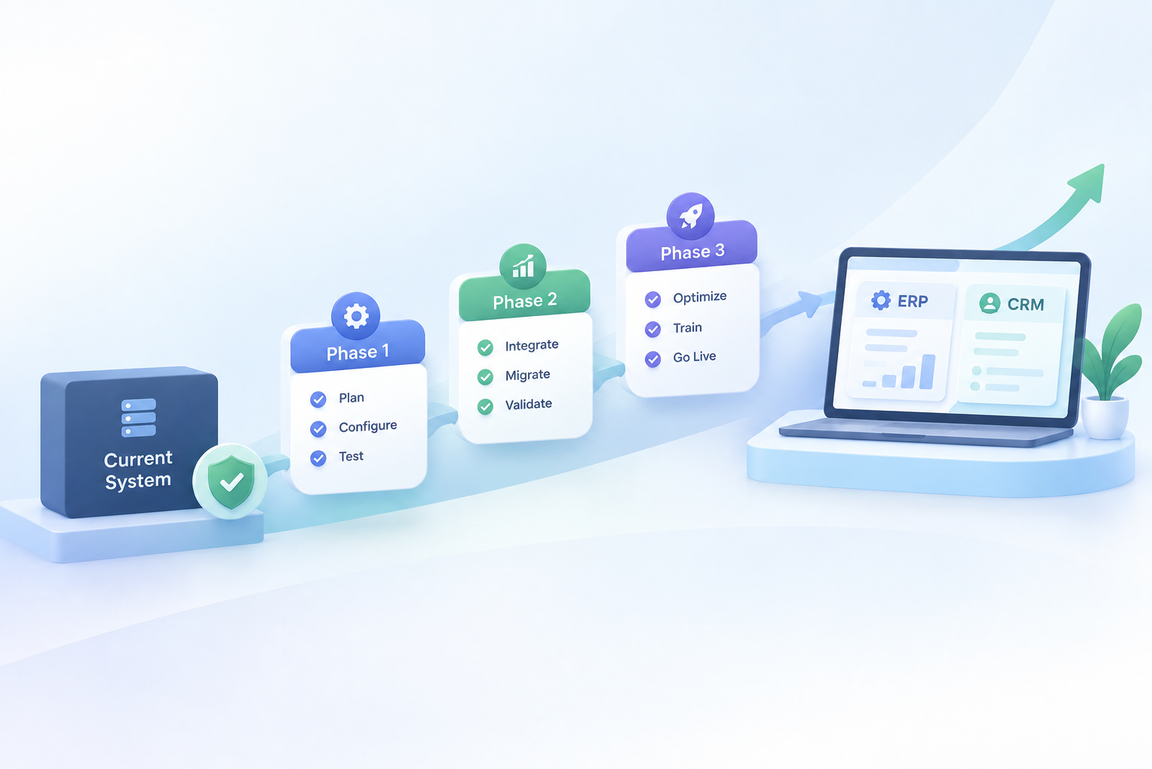
Every BFSI or fintech leader we’ve worked with has heard the same horror story at least once — a bank or NBFC switches on a new core system overnight, and for three weeks nobody can process loan disbursements properly. That’s the risk of a “big-bang” ERP or CRM rollout, and it’s exactly why phased implementation […]

Why Microservices Architecture Reduces Long-Term Maintenance Cost (A BFSI Perspective)

Every BFSI and fintech leader we’ve worked with at Speqto Technologies eventually asks us the same question: “Our monolith works fine today, so why should we spend money breaking it apart?” Fair question. The honest answer is — you shouldn’t do it for today. You do it for the three years after today, when your […]

Building Customer-Facing Portals for Financial Institutions: What Actually Works

Over the last few years, our team at Speqto Technologies has built portals for NBFCs, cooperative banks, insurance brokers, and a couple of wealth management firms. One thing that keeps surprising clients: the hardest part is rarely the UI. It’s getting core banking integrations, compliance workflows, and support escalation to work together without the whole […]

How AI Can Improve Fraud Detection in Banking Systems: What Actually Works

Most banks we talk to aren’t short on fraud rules. They have hundreds of them — thresholds on transaction amount, geography mismatches, velocity checks, blacklisted IFSC codes. The problem isn’t the lack of rules; it’s that fraudsters have learned to operate just below every threshold. That’s where AI earns its place, not as a buzzword, […]

POPULAR TAG

POPULAR CATEGORIES