

Loading...

From Static to Streaming: A Practical Developer’s Guide to Real-time Applications Using GraphQL Subscriptions

From Static to Streaming: A Practical Developer’s Guide to Real-time Applications Using GraphQL Subscriptions

Shakir Khan

21 November 2025

The Paradigm Shift: From Static to Streaming Experiences

In an era where user expectations demand instant gratification, the web has rapidly evolved beyond its static origins. Today, a modern application’s success is often measured by its ability to deliver real-time experiences, whether it’s live updates in a collaborative document, instantaneous notifications, or dynamic data dashboards. This fundamental shift from static to streaming data paradigms presents both challenges and opportunities for developers.

Traditionally, achieving real-time functionality involved complex polling mechanisms or intricate WebSocket implementations that could become unwieldy. However, the advent of GraphQL has provided a more elegant solution for managing data, and with GraphQL Subscriptions, developers now have a powerful, standardized method to build responsive and engaging real-time applications with remarkable efficiency. This practical developer’s guide will explore how.

Why Real-time Matters: Beyond the Request-Response Cycle

The core of many internet protocols, including HTTP, is based on a request-response model. While effective for retrieving data, it’s inherently inefficient when constant updates are required. Imagine a stock trading application or a live sports score tracker that relies solely on polling; it would either be constantly hitting the server, consuming excessive resources, or lagging behind actual events.

Real-time capabilities are crucial for:

  • Enhanced User Experience: Instant feedback and current data keep users engaged and informed.
  • Collaborative Platforms: Simultaneous updates across multiple clients for shared content.
  • Dynamic Dashboards: Visualizing data changes as they happen, critical for monitoring and analytics.
  • Notifications and Messaging: Delivering timely alerts and communications without delay.

This is where the power of streaming data comes into play, pushing updates from the server to the client as events occur, and GraphQL Subscriptions are at the forefront of this revolution.

Demystifying GraphQL Subscriptions: The Heart of Real-time Applications

GraphQL Subscriptions are a powerful addition to the GraphQL specification, designed specifically for push-based data flows. While GraphQL Queries fetch data once and GraphQL Mutations modify data, Subscriptions allow clients to listen for specific events happening on the server and receive data in real-time as those events occur. Think of it as a persistent query that automatically updates its results.

At a technical level, GraphQL Subscriptions typically leverage WebSockets, providing a persistent, full-duplex communication channel between the client and the server. When a client subscribes to an event, the server establishes this connection and pushes relevant data payloads to the client whenever the subscribed event is triggered.

A Practical Developer’s Guide to Implementation

Implementing GraphQL Subscriptions requires both server-side and client-side considerations. For developers, the beauty lies in how GraphQL abstracts away much of the underlying WebSocket complexity.

Server-Side Setup

On the server, you’ll typically extend your GraphQL schema with a `Subscription` type. Resolvers for subscription fields don’t return data directly; instead, they return an `AsyncIterator` that yields data whenever a relevant event occurs. A `PubSub` engine (like `graphql-subscriptions` or a more robust solution like `RedisPubSub` for distributed systems) is often used to manage events and broadcast them to subscribed clients.

Client-Side Consumption

Modern GraphQL clients, such as Apollo Client, offer seamless integration with subscriptions. They handle the WebSocket connection, send the subscription query, and automatically update the client-side cache or UI whenever new data arrives. Developers can simply define a subscription query, similar to how they define queries or mutations, and the client takes care of the real-time stream.

Key Considerations

  • Scalability: For large-scale real-time applications, consider using external `PubSub` systems like Redis or Kafka to manage event broadcasting across multiple GraphQL server instances.
  • Authentication and Authorization: Ensure that only authorized clients can subscribe to specific data streams by implementing proper checks within your subscription resolvers.
  • Error Handling: Design robust error handling for both the WebSocket connection and the data payloads.
  • Connection Management: Clients should be prepared to handle reconnections gracefully.

The Benefits of Embracing Streaming with GraphQL Subscriptions

Adopting GraphQL Subscriptions for real-time applications offers significant advantages for developers:

  • Declarative Data Fetching: Just like queries and mutations, you declare exactly what data you need for your real-time updates.
  • Unified API: Use a single GraphQL endpoint for queries, mutations, and subscriptions, simplifying client-server architecture.
  • Reduced Network Overhead: Instead of continuous polling, data is pushed only when necessary.
  • Developer Experience: Modern GraphQL client libraries make integrating real-time features surprisingly straightforward.
  • Flexible and Type-Safe: Benefit from GraphQL’s strong typing, ensuring data consistency and reducing runtime errors in your streaming applications.

Conclusion: Empowering Real-time Applications

The journey from static web experiences to dynamic, real-time applications is continuous, and GraphQL Subscriptions offer a powerful, elegant, and practical developer’s guide to navigating this evolution. By understanding and implementing this technology, developers can move beyond traditional request-response limitations, crafting highly interactive, responsive, and truly engaging user experiences. Embrace the power of streaming data; your real-time applications will thank you for it.

RECENT POSTS

Reducing Loan Processing Time Through Workflow Automation: What Actually Works

If you’ve spent any time in lending operations, you already know the real cost of a slow loan cycle isn’t just customer frustration — it’s lost business. A borrower who waits 10 days for approval has usually applied with two other lenders in the meantime. We’ve seen this play out repeatedly with our BFSI clients […]
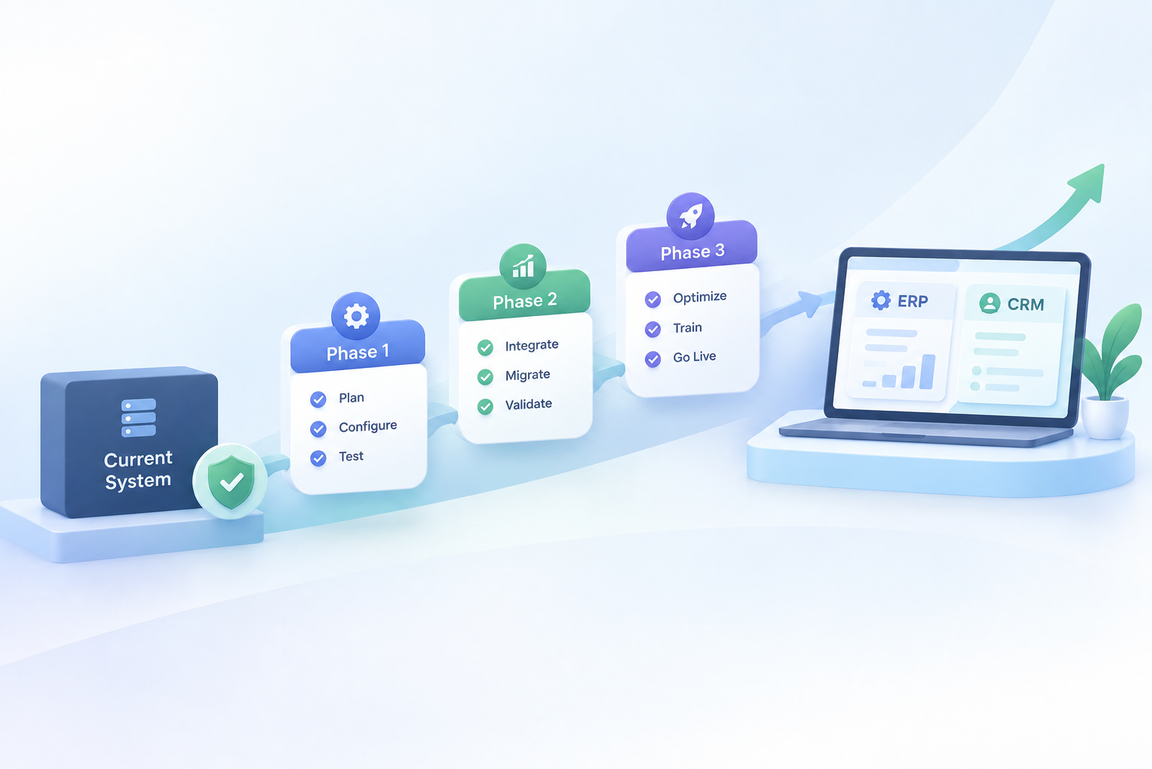

How to Plan a Phased ERP or CRM Implementation Without Breaking What Already Works

Every BFSI or fintech leader we’ve worked with has heard the same horror story at least once — a bank or NBFC switches on a new core system overnight, and for three weeks nobody can process loan disbursements properly. That’s the risk of a “big-bang” ERP or CRM rollout, and it’s exactly why phased implementation […]

Why Microservices Architecture Reduces Long-Term Maintenance Cost (A BFSI Perspective)

Every BFSI and fintech leader we’ve worked with at Speqto Technologies eventually asks us the same question: “Our monolith works fine today, so why should we spend money breaking it apart?” Fair question. The honest answer is — you shouldn’t do it for today. You do it for the three years after today, when your […]

Building Customer-Facing Portals for Financial Institutions: What Actually Works

Over the last few years, our team at Speqto Technologies has built portals for NBFCs, cooperative banks, insurance brokers, and a couple of wealth management firms. One thing that keeps surprising clients: the hardest part is rarely the UI. It’s getting core banking integrations, compliance workflows, and support escalation to work together without the whole […]

How AI Can Improve Fraud Detection in Banking Systems: What Actually Works

Most banks we talk to aren’t short on fraud rules. They have hundreds of them — thresholds on transaction amount, geography mismatches, velocity checks, blacklisted IFSC codes. The problem isn’t the lack of rules; it’s that fraudsters have learned to operate just below every threshold. That’s where AI earns its place, not as a buzzword, […]

POPULAR TAG

POPULAR CATEGORIES