
The Role of AI in Modern Software Testing
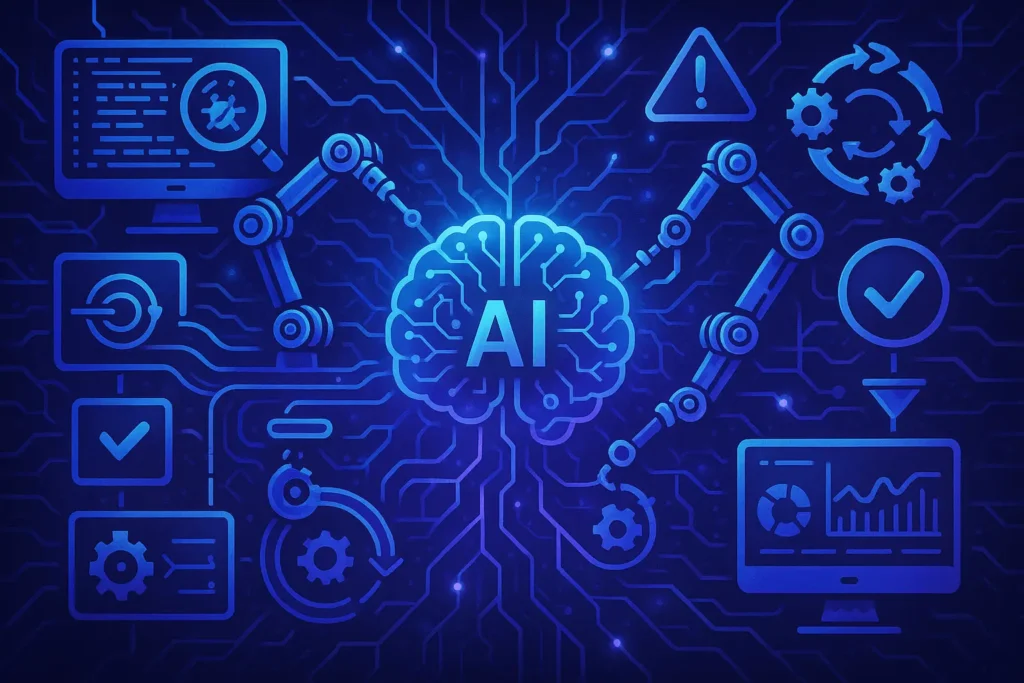
Artificial Intelligence is revolutionizing software testing by making it faster, smarter, and more predictive. For QA teams and developers facing tighter release cycles, growing complexity, and the demand for higher quality, AI-powered testing tools provide automation, insight, and adaptability that traditional methods can’t match. From self-healing scripts to predictive bug detection, AI is reshaping how quality assurance is done in modern software development.
By integrating AI, testing processes can adapt dynamically to application changes, reduce repetitive manual work, and surface potential defects earlier in the development lifecycle. This shift is not about replacing testers but enabling them to focus on strategic quality improvements while AI handles routine checks.
Problem Statement
Traditional testing often struggles to keep pace with rapid development, especially in agile and DevOps environments. Manual test case creation, brittle automated scripts, and reactive bug detection lead to inefficiencies and missed defects. As applications become more complex—spanning web, mobile, APIs, and AI-driven components—the scope of testing has grown beyond what human teams alone can manage efficiently.
In 2025, AI bridges this gap by enabling automation that learns from past results, adapts to changes without constant script updates, and predicts high-risk areas before failures occur. The result is faster releases, reduced defect leakage, and a higher return on QA investments.
Our Approach to AI in Testing
At Speqto, we integrate AI testing tools into our QA workflows to enhance coverage and efficiency. Our process starts with analyzing historical defect data to identify patterns, which AI models then use for predictive test planning. We pair AI-powered automation frameworks with traditional manual verification for critical business flows, ensuring both speed and accuracy.
We focus on self-healing automation—scripts that automatically adapt when UI elements change—reducing maintenance costs. Combined with visual AI testing, this ensures that UI regressions are caught instantly, even across thousands of variations.
Tools and Techniques We Use
Our AI testing toolkit includes Applitools for visual AI-based regression, Testim and Mabl for adaptive UI automation, and Selenium enhanced with AI-powered locators for resilience. We also leverage ChatGPT API for generating test scenarios and edge cases from requirements.
Techniques we apply include Natural Language Processing (NLP) for auto-generating test cases from user stories, machine learning for defect prediction, and intelligent prioritization to run high-value tests first in CI/CD pipelines.
Tips and Lessons Learned
AI testing is most effective when paired with strong data management—feeding it clean, labeled defect and execution history. Start small with one AI testing tool before expanding across projects. Always keep human validation in the loop for critical functionality.
We’ve learned that while AI reduces repetitive tasks, success depends on continuous model training. Keeping models updated with the latest application behavior ensures accuracy and minimizes false positives or negatives.
Data and Examples
In our projects, AI-based testing has reduced regression execution time by up to 50% and cut automation maintenance by 40%. For example, using self-healing locators in Testim prevented over 200 script failures in a single sprint due to UI changes.
In another case, predictive defect analysis helped us identify 80% of high-risk modules before testing even began, allowing targeted test design and early fixes that reduced production issues.
Visuals
An illustration showing AI-powered testing workflow, from requirement analysis to predictive bug detection, visual testing, and self-healing automation. Alt text: AI in modern software testing workflow.
Real-Life Example: Speqto’s AI Testing Success
In a recent fintech project, Speqto implemented AI-driven visual regression testing combined with predictive defect analysis. The QA team detected UI inconsistencies within hours instead of days, and automation scripts updated themselves in real time. This led to a 35% reduction in bug leakage to production and accelerated release cycles by two weeks.
For related reads, check our posts: Exploring Top 8 Differences: AI Chat GPT vs Bard AI and Understanding the Latest Web Development Tech Stack.
Conclusion
AI is transforming software testing from a reactive process into a proactive, intelligent, and adaptive discipline. By combining AI tools with human expertise, QA teams can achieve higher accuracy, faster delivery, and greater confidence in product quality.
Interested in modernizing your QA process? Contact Speqto for expert guidance on integrating AI into your testing strategy.
Have questions or need help with AI in testing? Reach out to Speqto’s solutions team or explore our services page.