

Loading...

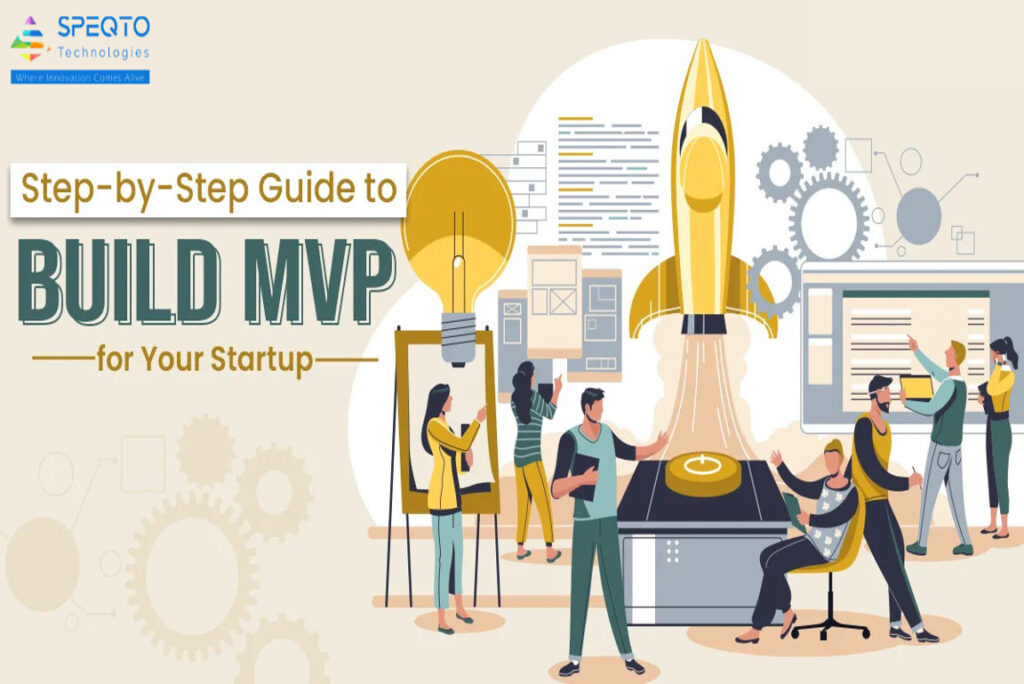
From Idea to MVP: A Step-by-Step Guide for Startup Founders

From Idea to MVP: A Step-by-Step Guide for Startup Founders

Karan Kumar

17/12/2025

At Speqto, we work closely with startup founders who are driven by strong ideas but often face uncertainty about how to turn those ideas into real, working products. Entering the market quickly, validating assumptions, and managing limited resources are constant challenges.

In 2025, the most successful startups are not the ones with the biggest ideas — they are the ones that execute smartly. This is where building a Minimum Viable Product (MVP) becomes critical.

An MVP helps founders move from concept to reality with clarity, speed, and focus. It allows startups to test ideas, gather real user feedback, and build a strong foundation for growth — without overbuilding or overspending.

From our experience, startups succeed when ideas are transformed into MVPs through structured planning, clear priorities, and the right technical approach.

Why Building an MVP Matters

In today’s fast-moving startup ecosystem, launching a full-scale product without validation is risky. Markets change quickly, user expectations evolve, and early assumptions may not always be correct.

An MVP helps founders:

  • Validate the core idea with real users
  • Reduce development time and cost
  • Identify what users truly value
  • Attract early investors or stakeholders
  • Build a roadmap based on real data, not assumptions

Rather than aiming for perfection, an MVP focuses on solving one core problem exceptionally well. This approach turns ideas into learning opportunities and helps founders make smarter, data-driven decisions.

3 Key Steps to Move From Idea to MVP
1. Defining the Core Problem and Value Proposition

Every successful MVP starts with clarity. Founders often begin with a broad vision, but the key is narrowing it down to a single, meaningful problem.

At Speqto, we help founders ask the right questions:

  • What problem are we solving?
  • Who is the target user?
  • What is the one key value we are delivering?

This step eliminates unnecessary features and ensures the MVP is focused on what truly matters. A well-defined problem statement becomes the foundation for all product and technical decisions.

2. Prioritizing Features That Matter Most

One of the biggest mistakes startups make is trying to build too much, too soon. An MVP is not a smaller version of the final product — it’s the smartest version of it.

We work with founders to:

  • Identify must-have features vs nice-to-have features
  • Design simple user flows around the core use case
  • Avoid complexity that delays launch and learning

By focusing only on essential functionality, startups can launch faster, gather feedback earlier, and iterate based on real-world usage.

3. Building, Launching, and Learning From Real Users

Once the scope is defined, execution becomes the priority. The goal is to build a stable, scalable MVP that delivers value while remaining flexible for future growth.

At this stage, founders should:

  • Launch quickly to a controlled user group
  • Track user behavior and engagement
  • Collect feedback through analytics and conversations
  • Refine the product based on insights

An MVP is not the end goal — it’s the starting point for learning, improvement, and long-term product evolution.

How We Support Founders at Speqto

Building an MVP is both a strategic and technical journey. Founders need more than just developers — they need partners who understand business goals, timelines, and growth challenges.

At Speqto, we support startups through:

  • Idea validation and product discovery workshops
  • MVP planning and feature prioritization
  • UI/UX design focused on usability and speed
  • Scalable development aligned with future growth
  • Continuous feedback-driven iterations

Our approach ensures founders move forward with clarity, confidence, and a product built to evolve with market needs.

Conclusion

Turning an idea into a successful product doesn’t start with building everything — it starts with building the right thing. An MVP allows founders to test, learn, and grow without unnecessary risk.

In 2025, speed, focus, and adaptability define startup success. A structured MVP approach helps founders transform ideas into validated products that users want and markets accept.

At Speqto, we help founders bridge the gap between ideas and execution — turning vision into early traction and long-term growth.

The journey from idea to MVP is where startups are truly born — and we’re here to help you build what matters.

RECENT POSTS

How Blockchain Is Quietly Entering Mainstream BFSI Operations

Nobody in banking wants to talk about blockchain anymore — at least not the way they did in 2018, when every conference deck had a slide promising to “disrupt finance forever.” That noise has died down. But something quieter and more useful has taken its place: banks, NBFCs, and insurers are actually using distributed ledger […]

Smart Contract Security: What Businesses Must Verify Before Launch

Last year, a mid-sized lending platform in the UAE lost close to $2.3 million because of a single unchecked reentrancy pattern in their loan disbursement contract. The code had passed two internal reviews. It looked clean. It wasn’t. This is the kind of story that keeps BFSI and fintech leaders up at night, and honestly, […]

Building a Wallet or Points-Based Loyalty System for Fintech: What Actually Works

Every fintech founder we talk to eventually asks the same question: “Should we build a wallet-based rewards system or a points-based one?” It sounds like a small product decision, but it shapes your compliance load, your tech architecture, and honestly, how fast you can ship features later. At Speqto Technologies, we’ve built both types for […]

What CTOs Should Ask Before Hiring an Offshore Dev Team (Especially in BFSI and Fintech)

A few months back, a VP of Engineering at a mid-sized lending platform told us something that stuck: “We didn’t lose money because the offshore team couldn’t code. We lost money because nobody asked who owns the AWS root account.” That one sentence captures most of what goes wrong in offshore hiring decisions. It’s rarely […]

Reducing Loan Processing Time Through Workflow Automation: What Actually Works in BFSI

Every NBFC and fintech lender we’ve worked with at Speqto Technologies starts with the same complaint: loan files are stuck somewhere between “submitted” and “disbursed,” and nobody can say exactly where or why. Not because the team is slow, but because the process is scattered across emails, PDFs, spreadsheets, and three different logins that don’t […]

POPULAR TAG

POPULAR CATEGORIES