

Loading...

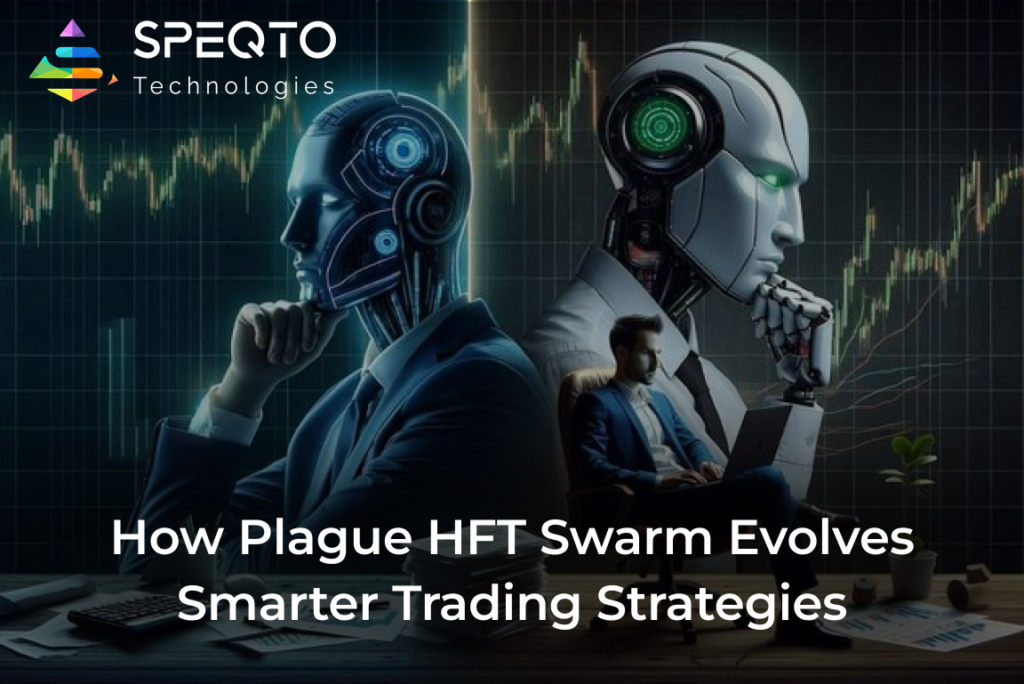
How Plague HFT Swarm Evolves Smarter Trading Strategies

How Plague HFT Swarm Evolves Smarter Trading Strategies

Jasleen

30 July, 2025

At the cutting edge of algorithmic trading, static strategies are no longer enough. Markets evolve, volatility spikes, and alpha decays faster than ever. That’s where Plague HFT Swarm comes in — a next-generation trading system that learns, adapts, and optimizes itself using concepts inspired by biology, mathematics, and real-world finance.

Why Evolutionary Trading Matters

In high-frequency trading (HFT), milliseconds make the difference between a profit and a loss. Traditional rule-based systems often break down when market conditions shift. That’s why Plague HFT Swarm takes inspiration from nature — evolving strategies over time through mechanisms like genetic reproduction, predator-prey simulation, and multi-objective optimization.

Instead of relying on rigid strategies, this system constantly re-evaluates what works, optimizing itself for risk, reward, and adaptability.

Key Components of Plague HFT Swarm

1. 🧠 The Master Orchestrator

The plague_master_orchestrator.py file serves as the command center, coordinating all submodules. It manages data flow, strategy deployment, and feedback loops across the ecosystem, ensuring real-time responsiveness.

2. 🧬 The Predator-Prey Engine

Inspired by evolutionary biology, predator_prey_engine.py models the survival of the fittest. Trading strategies compete against each other in simulations, with successful ones surviving and evolving into new variants.

3. 📈 Momentum & Volatility Modules

To understand market trends and risk states, the system uses momentum.py and volatility_regime.py. These components help determine whether strategies should act aggressively, hedge, or hold back based on live data.

4. 🧪 Bayesian Shrinkage & Alpha Memory

Noise is the enemy of precision. bayesian_shrinkage.py applies statistical shrinkage techniques to refine estimates, while alpha_memory_v2.py stores past strategy performance, enabling smarter decisions about which ideas to keep or discard.

5. 🧠 Heliorhodopsin Swarm Intelligence

Yes, it has a sci-fi name — but it’s all math and logic. This module (heliorhodopsin_bio_swarm_v2.py) simulates swarm behavior, allowing groups of trading agents to explore various options and converge on the most effective ones — much like bees choosing the best nectar source.

6. ⚖️ Multi-Objective Optimization

Using Pareto front logic, multi_objective_optimizer_v2.py lets the system balance trade-offs. For instance, it may weigh profitability vs. drawdown risk — ensuring strategies aren’t just high-performing, but also sustainable.

Built for Adaptability and Performance

Plague HFT Swarm isn’t just powerful — it’s modular, testable, and easy to scale. With utilities like:

  • setup_plague_system.py for quick deployment
  • diagnose_and_fix.py for automated debugging
  • walk_forward_optimizer.py to validate robustness

…it ensures that even complex strategies are reliable in real-world trading.

How This Framework Benefits Traders

  • 🔁 Continuously evolves trading strategies based on performance
  • 📊 Handles complex market conditions through modular intelligence
  • 📉 Minimizes risk of alpha decay via constant optimization
  • 🚀 Designed for real-time, high-speed decision making
  • 🔍 Offers transparency through detailed diagnostics and memory tracking

Conclusion

By combining the best of nature-inspired computing and cutting-edge finance, Plague HFT Swarm represents a new paradigm in automated trading. It’s not just about placing trades — it’s about evolving them.

With modules that simulate competition, remember the past, adapt to volatility, and optimize across multiple objectives, Plague Swarm provides a smarter way to trade in a world that never stops changing.

If you’re building the future of trading — this is the kind of intelligence you need on your side.

RECENT POSTS

Choosing a Tech Partner Who Actually Understands Regulatory Compliance

A few months back, a fintech client came to us after a failed product launch. Their previous development partner had built a solid lending app — clean UI, fast performance, good UX. The problem? Nobody on that team had accounted for RBI’s Digital Lending Guidelines around data storage and third-party data sharing. The app went […]

How Automation Reduces Manual Errors in Banking Back-Office Work

A few months ago, we sat down with the operations head of a mid-sized NBFC who told us something that stuck with us: “My team isn’t lazy or careless. They’re just human, and humans reconciling 40,000 transactions a day will always slip somewhere.” That one sentence sums up why banking back offices keep bleeding money […]

Building Dashboards for Real-Time Transaction Monitoring: What Actually Works in BFSI

A few months back, one of our fintech clients — a Mumbai-based NBFC processing close to 40,000 UPI and card transactions a day — came to us with a problem that sounded simple on the surface: “Our fraud team is looking at data that’s 15 minutes old, and by the time they act, the money’s […]

Why a Dedicated PM Matters in Outsourced Software Projects (Especially for BFSI Teams)

A few months ago, a fintech client came to us at Speqto Technologies after a rough experience with a previous outsourcing vendor. The code wasn’t the problem — their developers were competent. The problem was that nobody owned the project end to end. Requirements got lost in Slack threads, QA found bugs three sprints too […]

What Startup India and MeitY Recognition Actually Means When You’re Evaluating a Tech Vendor

If you’re on the vendor onboarding side of a bank, NBFC, or fintech company, you’ve seen this drill a hundred times. A vendor sends over a slick deck, promises the moon on integration timelines, and then your compliance team spends three weeks trying to figure out if this company even legally exists in a form […]

POPULAR TAG

POPULAR CATEGORIES