Loading...

BNPL Platform Development: What Indian Fintechs Need to Know Before They Build

Buy Now Pay Later looked like free money for a while. Between 2020 and 2022, every second fintech pitch deck in India had a BNPL slide. Then RBI’s digital lending guidelines landed, a few PPI circulars tightened the screws, and a chunk of that market quietly shrunk or pivoted to “pay in 3” and merchant EMI products instead.

At Speqto, we’ve built lending and checkout infrastructure for a handful of fintechs and D2C platforms trying to add BNPL rails — some from scratch, some migrating off a third-party BNPL aggregator because they wanted control over underwriting and user experience. What we’ve learned is that the technology is the easy part. Getting the compliance architecture, lending partnerships, and risk engine right is where most projects stall.

1. Decide who’s actually lending the money — before you write a line of code

This sounds obvious, but we’ve seen founders start building checkout flows before deciding whether they’ll partner with an NBFC, apply for their own NBFC license, or run a co-lending model with a bank. This decision changes your entire data flow — who holds the loan book, who reports to credit bureaus, who’s liable for FLDG (First Loss Default Guarantee, capped at 5% per RBI’s September 2022 circular).

For a Pune-based electronics marketplace we worked with, this decision alone took three months longer than their tech build. They initially wanted to be the lender themselves, realised the NBFC licensing timeline didn’t match their go-live target, and pivoted to a lending-service-provider (LSP) model with a partner NBFC. We had to rebuild the loan origination flow midway because the data ownership and consent architecture changes depending on who’s the regulated entity.

2. RBI’s digital lending guidelines aren’t optional checkboxes

A few things that trip up teams building BNPL in-house:

  • Direct disbursal and repayment: Money must flow directly between the lender’s and borrower’s bank accounts — no pass-through via the fintech’s or LSP’s account. This changes your payment architecture significantly if you were planning to route funds through your own wallet.
  • Key Fact Statement (KFS): Every BNPL transaction needs a standardised KFS shown before the customer confirms — APR, all-in cost, penalty charges. We’ve had to build this as a hard gate in the checkout flow, not a terms-and-conditions link nobody reads.
  • Cooling-off period: Borrowers need the option to exit the loan within a specified period by paying principal and proportionate APR, without penalty. Your loan management system needs to handle this as a first-class state, not an afterthought.
  • No PPI credit lines: RBI’s June 2022 circular effectively killed the model where BNPL ran as a credit line loaded onto a prepaid wallet. If your architecture still resembles that, it needs rework.

One client, a grocery delivery app expanding into tier-2 cities, had their original BNPL flow built around exactly this PPI-credit-line structure through a partner. We had to re-architect it as a direct NBFC-to-borrower loan disbursal with the checkout acting purely as an initiation point, not a value-loading mechanism.

3. Underwriting in India needs more than a CIBIL score

A large chunk of your target BNPL users — first-time credit users, gig workers, tier-2/3 shoppers — simply don’t have a thick credit file. Bureau data (CIBIL, Experian, CRIF) is table stakes, but real approval rates come from blending it with alternative signals:

  • Account Aggregator (AA) framework data for bank statement analysis — consented, structured, and far more reliable than screen-scraping
  • Device and behavioural signals — order history, repayment patterns on smaller tickets, app usage consistency
  • Merchant-side data if you’re embedded at checkout — basket size, category, repeat purchase frequency

For the D2C skincare brand we worked with, blending AA-based bank statement data with their own order history data improved approval rates for repeat customers by a meaningful margin, without touching default rates — because the signal wasn’t “can they pay,” it was “do they actually behave like a repeat, reliable customer.”

4. Build the core lending engine like infrastructure, not a feature

A lot of early BNPL builds treat the loan as a line item in the order object. That breaks the moment you need part-prepayment, loan restructuring, multiple tenure options, or a switch in lending partner. We always recommend separating:

  • Loan Origination System (LOS) — KYC, eligibility, KFS, consent capture
  • Loan Management System (LMS) — EMI schedules, repayments, penalties, cooling-off handling
  • Risk/decisioning engine — pluggable, so you can swap scoring models without touching the LOS

This separation is what let our electronics marketplace client switch NBFC partners within six weeks when their first partner’s risk appetite narrowed — they didn’t have to rebuild the checkout or LOS, just reconnect the decisioning layer.

5. Fraud is cheaper to prevent than to write off

BNPL fraud in India isn’t exotic — it’s mostly synthetic identities, device farming, and first-payment-default patterns where users max out limits and vanish. Device fingerprinting, velocity checks on sign-ups from the same device/IP, and cross-referencing merchant category with user profile catch most of it before disbursal, not after.

The real takeaway

BNPL in India isn’t dead, but the easy-growth phase is over. What works now is disciplined architecture — clear lending partnerships, compliance baked into the flow rather than bolted on, and underwriting that uses data most competitors aren’t bothering to collect. If you’re a fintech or BFSI team evaluating whether to build this in-house or with a partner who’s navigated these regulatory and architectural trade-offs before, that’s exactly the kind of build we spend our time on at Speqto.

RECENT POSTS

BNPL Platform Development: What Indian Fintechs Need to Know Before They Build

Buy Now Pay Later looked like free money for a while. Between 2020 and 2022, every second fintech pitch deck in India had a BNPL slide. Then RBI’s digital lending guidelines landed, a few PPI circulars tightened the screws, and a chunk of that market quietly shrunk or pivoted to “pay in 3” and merchant […]

Reducing Loan Processing Time Through Workflow Automation: What Actually Works

If you’ve spent any time in lending operations, you already know the real cost of a slow loan cycle isn’t just customer frustration — it’s lost business. A borrower who waits 10 days for approval has usually applied with two other lenders in the meantime. We’ve seen this play out repeatedly with our BFSI clients […]

How to Plan a Phased ERP or CRM Implementation Without Breaking What Already Works

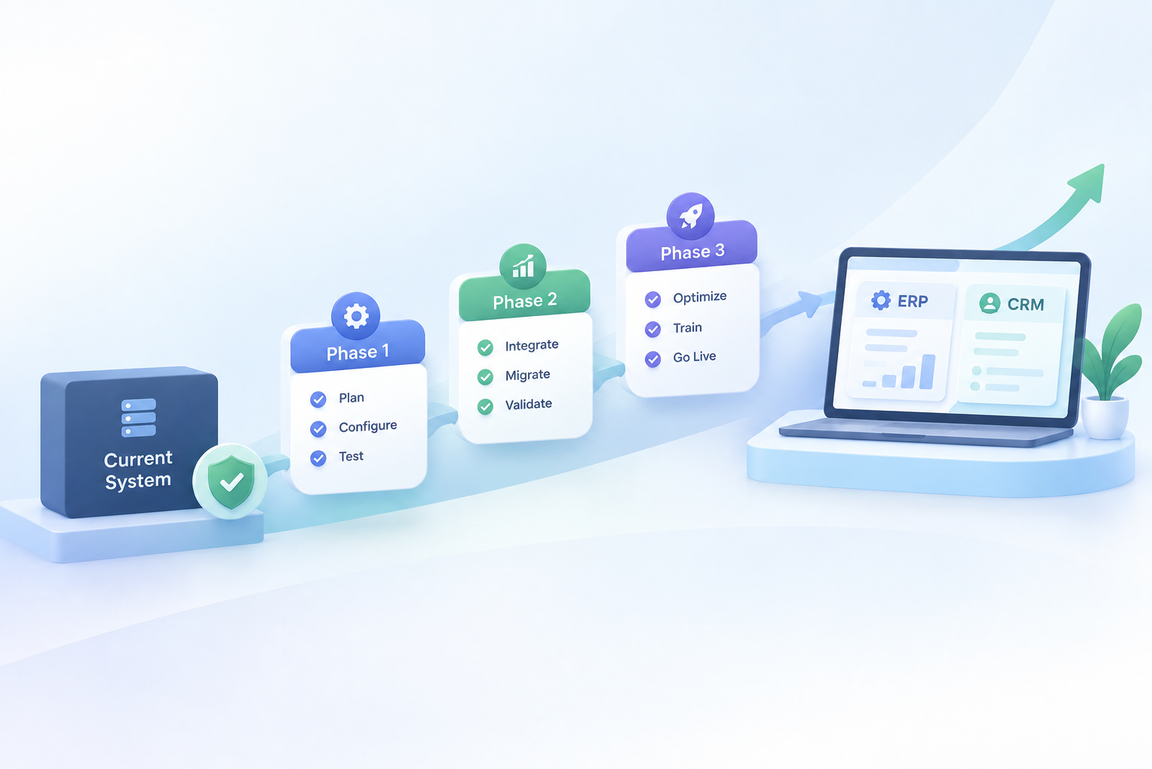
Every BFSI or fintech leader we’ve worked with has heard the same horror story at least once — a bank or NBFC switches on a new core system overnight, and for three weeks nobody can process loan disbursements properly. That’s the risk of a “big-bang” ERP or CRM rollout, and it’s exactly why phased implementation […]

Why Microservices Architecture Reduces Long-Term Maintenance Cost (A BFSI Perspective)

Every BFSI and fintech leader we’ve worked with at Speqto Technologies eventually asks us the same question: “Our monolith works fine today, so why should we spend money breaking it apart?” Fair question. The honest answer is — you shouldn’t do it for today. You do it for the three years after today, when your […]

Building Customer-Facing Portals for Financial Institutions: What Actually Works

Over the last few years, our team at Speqto Technologies has built portals for NBFCs, cooperative banks, insurance brokers, and a couple of wealth management firms. One thing that keeps surprising clients: the hardest part is rarely the UI. It’s getting core banking integrations, compliance workflows, and support escalation to work together without the whole […]

POPULAR CATEGORIES