
Loading...

Why Vietnam and Offshore Dev Hubs Are Gaining Enterprise Trust in BFSI and Fintech

Three years ago, if you mentioned Vietnam to a CTO at a mid-size bank, you’d probably get a polite nod and a question about India instead. Today, that same conversation looks different. We’ve had BFSI clients at Speqto specifically ask us to scope teams out of Ho Chi Minh City and Da Nang, not because it’s cheaper (though it often is), but because the risk profile has changed in Vietnam’s favor.

That shift didn’t happen by accident. It’s the result of a decade of infrastructure investment, a genuine engineering talent surplus, and a maturing compliance ecosystem that finally speaks the language BFSI procurement teams need to hear.

The Talent Math Actually Works Now

Vietnam graduates roughly 50,000-57,000 IT and computer science students annually, and that number has been climbing steadily since 2019. What’s changed isn’t just volume, it’s specialization. We’re now seeing engineers coming out with dedicated coursework in blockchain, applied cryptography, and financial systems architecture, not just generic full-stack training.

One of our fintech clients, a Singapore-based payments platform processing cross-border remittances, initially hired a 4-person Vietnam-based team purely for QA automation. Eighteen months later, that team has grown to 14 engineers and now owns a core reconciliation microservice. The client’s engineering VP told us the decision to expand wasn’t cost-driven at that point, it was because the team’s code review quality matched their in-house Singapore engineers.

Compliance Stopped Being the Blocker

For years, the biggest objection BFSI clients raised about offshore Vietnam wasn’t skill, it was regulatory comfort. PCI-DSS, SOC 2, GDPR-adjacent data handling for European clients, these used to require so much hand-holding that the cost savings evaporated.

That’s changed materially. Vietnamese IT service providers and in-house teams increasingly operate under ISO 27001-certified environments as a baseline, not an add-on. We’ve built entire delivery pods for a European neobank client where the Vietnam-based squad operates in a segregated environment with SOC 2 Type II controls mirrored from the client’s own US infrastructure. The audit last year took less time than the client’s own domestic audit cycle.

This matters because BFSI risk committees don’t approve offshore expansion on promises, they approve it on paper trails: certifications, audit logs, incident response SLAs. Vietnam-based providers have gotten noticeably better at producing that paper trail without the client having to build it themselves.

Government Backing Isn’t Just Marketing

Vietnam’s push toward becoming a “digital tech nation” isn’t a slogan sitting in a ministry brochure. Programs supporting semiconductor and software parks in Da Nang and Quy Nhon have translated into real tax incentives for tech firms and, more usefully for enterprise clients, into stable business continuity infrastructure: redundant power, tier-3 data centers, and improved undersea cable capacity after the repeated 2022-2023 outages that spooked a lot of clients.

We had a client, a US-based lending platform, pause a Vietnam engagement in early 2023 specifically because of cable disruptions affecting latency for their real-time underwriting API. That same client resumed and doubled team size in 2024 once redundancy improvements were visible. Infrastructure resilience, not just talent cost, is now part of the enterprise due diligence checklist, and Vietnam is closing that gap faster than most people expected.

Why Fintech Buyers Specifically Are Warming Up

Fintech decision-makers care about two things offshore hubs historically struggled with: speed of iteration and domain fluency. A generic offshore team that needs three sprints to understand KYC workflows or settlement cycles is expensive no matter the hourly rate.

What we’ve noticed with Vietnam-based engineering talent is a faster domain ramp-up, partly because a lot of engineers have already worked on regional fintech products (Momo, ZaloPay, VNPay-adjacent systems) before moving into offshore contracting. They’ve seen wallet reconciliation logic, dispute management flows, and regulatory reporting requirements firsthand, even if the regulator was the State Bank of Vietnam instead of the Fed or MAS. The concepts transfer faster than clients expect.

Where the Real Trust Gets Built

None of this replaces due diligence. Enterprise clients still run vendor security assessments, still require dedicated VPNs and access logging, still insist on IP ownership clauses that hold up under their home jurisdiction’s law. What’s changed is that Vietnam-based teams, and the agencies that structure these engagements, now show up prepared for that conversation instead of being surprised by it.

At Speqto, the shift we’ve watched happen isn’t that Vietnam suddenly became a low-risk destination overnight. It’s that enough BFSI and fintech clients ran the pilot, checked the SLAs, audited the security posture, and came back for a second phase. Trust in offshore hubs was never going to be built on a marketing pitch. It’s being built one renewed contract at a time, and Vietnam’s renewal rates are starting to show it.

RECENT POSTS

Why Vietnam and Offshore Dev Hubs Are Gaining Enterprise Trust in BFSI and Fintech

Three years ago, if you mentioned Vietnam to a CTO at a mid-size bank, you’d probably get a polite nod and a question about India instead. Today, that same conversation looks different. We’ve had BFSI clients at Speqto specifically ask us to scope teams out of Ho Chi Minh City and Da Nang, not because […]
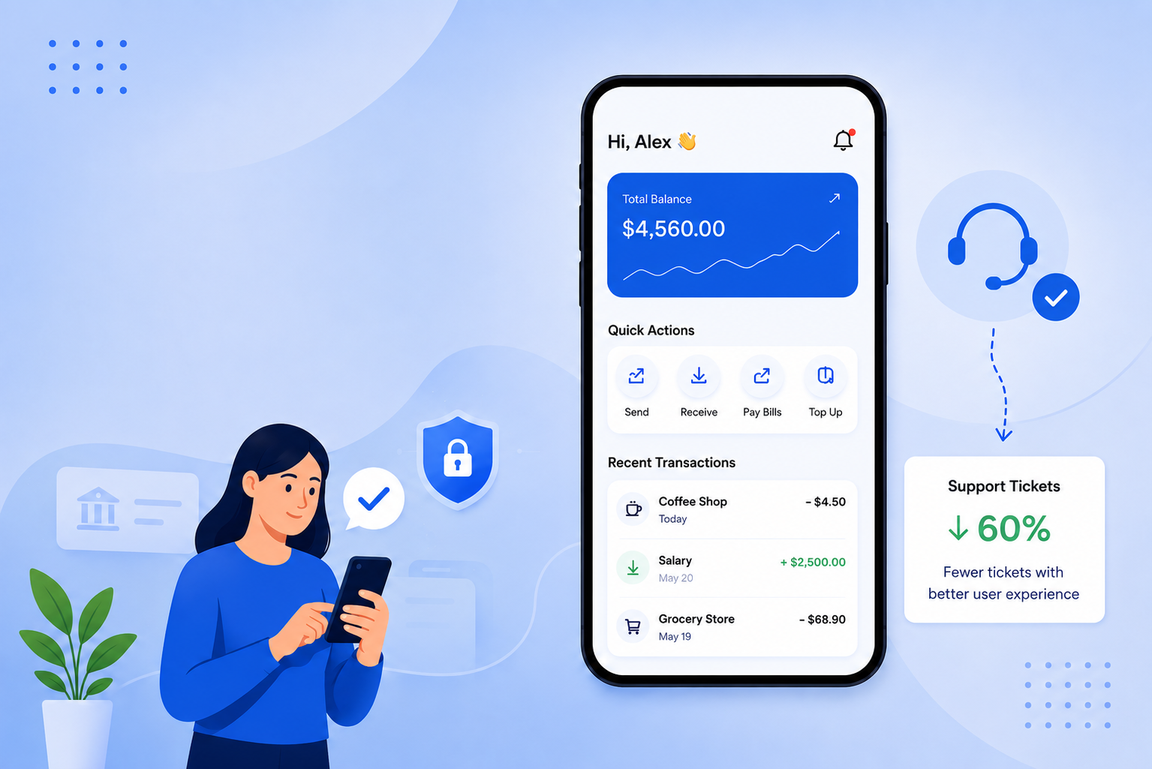

Reducing Support Tickets Through Better UX in Fintech Apps

Every fintech founder we’ve worked with at Speqto eventually asks the same question: “Why is our support team drowning in tickets?” The honest answer, nine times out of ten, isn’t a training problem or a staffing problem. It’s a UX problem wearing a customer support costume. We recently audited the support logs for an NBFC […]

How Digital Lending Platforms Are Evolving in India: Beyond the App-Only Approach

Three years ago, most digital lending conversations in India started and ended with one question: “Kitni jaldi loan disburse ho sakta hai?” Speed was the entire pitch. Today, when we sit down with NBFCs, banks, and fintech founders at Speqto Technologies, the conversation looks completely different. Speed is now table stakes. What decision-makers actually ask […]

What a Smart Contract Security Audit Actually Checks For

Every fintech founder we talk to has heard of the Poly Network hack, the Euler Finance exploit, or the Ronin Bridge breach. What fewer people know is that most of these incidents weren’t caused by some exotic zero-day nobody could have predicted. They came from issues that a competent audit would have flagged in the […]

Why WBS and Sprint Planning Prevent Project Delays (And Save Your Compliance Deadlines Too)

Last year, a mid-sized NBFC came to us with a loan origination system that was three months behind schedule. Their previous vendor had started coding on day one, no work breakdown, no sprint cadence, just “we’ll figure it out as we go.” By the time they called Speqto, nobody could tell them what percentage of […]

POPULAR CATEGORIES