
Loading...

Kubernetes for Non-Technical Founders: What You Actually Need to Know

If you’ve raised a seed round for your fintech or lending platform, chances are someone on your tech team has already said the word “Kubernetes” in a meeting, followed by nods from everyone pretending to understand. We’ve sat in those meetings too — at Speqto Technologies, we build and manage infrastructure for BFSI and fintech clients, and Kubernetes comes up in almost every conversation about scaling. This post is our attempt to explain it the way we wish someone had explained it to our non-technical clients on day one.

What Kubernetes Actually Is, Without the Jargon

Strip away the buzzwords and Kubernetes is a system that manages your application’s “containers” — small, self-contained packages of your software — across multiple servers. It decides which server runs what, restarts things that crash, and adds more capacity when traffic spikes.

Think of it like a building manager for a large office complex. You don’t personally check which floor has free desks or call maintenance when the AC breaks. The manager handles it. Kubernetes does the same for your application’s “desks” — except the desks are virtual servers running your payment gateway, your loan origination engine, or your KYC verification service.

Why This Matters More in BFSI Than in a Regular Startup

We worked with an NBFC client whose loan disbursement system would see a 6x traffic spike every month between the 1st and 5th — salary days, when EMI reminders and fresh applications both hit at once. Before they moved to a Kubernetes-managed setup, their servers would slow to a crawl during this window, and support tickets about failed transactions would pile up right when customer trust mattered most.

After migrating, the same system automatically added more server capacity during those five days and scaled back down afterward. No one had to manually provision servers at 11 PM on the 1st of the month. That’s the real value — not “modern infrastructure” as a vanity label, but fewer 2 AM phone calls and fewer customers abandoning a loan application because the page timed out.

The Compliance Angle You Shouldn’t Ignore

RBI guidelines and data localization requirements mean BFSI companies often need strict control over where data lives, how it’s isolated, and how quickly systems recover after a failure. Kubernetes doesn’t solve compliance by itself, but it makes certain things easier to prove to an auditor — like isolating your payment processing workload from your customer support dashboard, or showing that a failed server doesn’t mean failed transactions because the workload automatically shifted elsewhere within seconds.

For a payments startup we advised during their PA-DSS readiness assessment, having workloads properly separated in Kubernetes namespaces actually shortened their audit cycle. Their auditor could see clear boundaries between systems without the team writing lengthy manual explanations.

What You, as a Founder, Actually Need to Ask

You don’t need to learn YAML files or understand container orchestration internals. You need to ask your CTO or your infrastructure partner four things:

  • What happens if one server goes down right now? If the honest answer involves someone manually fixing it, you have a risk, not a Kubernetes setup.
  • Can we handle a sudden 5x traffic spike without a war room? This matters more during festive sales, EMI dates, or marketing campaigns than people admit.
  • Is our sensitive data properly isolated? Relevant for RBI audits, PCI-DSS, and investor due diligence.
  • What’s this costing us, and is it worth it at our current scale? This is the one founders skip, and it matters most.

When You Genuinely Don’t Need It

Here’s the part most vendors won’t tell you: if you’re pre-revenue or handling a few thousand transactions a month, Kubernetes can be overkill. We’ve seen early-stage fintech founders spend lakhs setting up a full Kubernetes cluster when a simpler managed hosting setup would have done the job for a fraction of the cost, with far less operational overhead.

One early-stage insurtech client came to us wanting a “proper Kubernetes setup” because a consultant told them it was the industry standard. After reviewing their actual traffic and team size, we recommended a simpler managed container setup instead, with a clear migration path once they crossed certain transaction volumes. They saved nearly 40% on infrastructure costs in their first year and only moved to a full Kubernetes architecture once their user base actually demanded it.

The Real Takeaway

Kubernetes isn’t a status symbol or a checkbox for investor pitch decks. It’s a tool that solves specific problems — unpredictable scaling, high availability, and structured compliance boundaries — that most BFSI and fintech platforms eventually face. Your job as a founder isn’t to understand the technology deeply. It’s to know when your business genuinely needs it, and to ask your technical partners direct questions instead of nodding along.

At Speqto Technologies, we spend as much time telling clients what they don’t need as what they do. If you’re trying to figure out whether your platform is at that stage yet, that’s a conversation worth having before you sign off on any infrastructure budget.

RECENT POSTS

AR/VR for Enterprise: Where BFSI Leaders Are Actually Seeing ROI in 2024

Ask any BFSI CIO about AR/VR two years ago and you’d get an eye-roll — “nice demo, no business case.” That conversation has changed. At Speqto Technologies, we’ve spent the last 18 months building immersive tech solutions for banking, insurance, and fintech clients, and the pattern is clear: the projects getting funded this year aren’t […]


Kubernetes for Non-Technical Founders: What You Actually Need to Know

If you’ve raised a seed round for your fintech or lending platform, chances are someone on your tech team has already said the word “Kubernetes” in a meeting, followed by nods from everyone pretending to understand. We’ve sat in those meetings too — at Speqto Technologies, we build and manage infrastructure for BFSI and fintech […]

BNPL Platform Development: What Indian Fintechs Need to Know Before They Build

Buy Now Pay Later looked like free money for a while. Between 2020 and 2022, every second fintech pitch deck in India had a BNPL slide. Then RBI’s digital lending guidelines landed, a few PPI circulars tightened the screws, and a chunk of that market quietly shrunk or pivoted to “pay in 3” and merchant […]

Reducing Loan Processing Time Through Workflow Automation: What Actually Works

If you’ve spent any time in lending operations, you already know the real cost of a slow loan cycle isn’t just customer frustration — it’s lost business. A borrower who waits 10 days for approval has usually applied with two other lenders in the meantime. We’ve seen this play out repeatedly with our BFSI clients […]

How to Plan a Phased ERP or CRM Implementation Without Breaking What Already Works

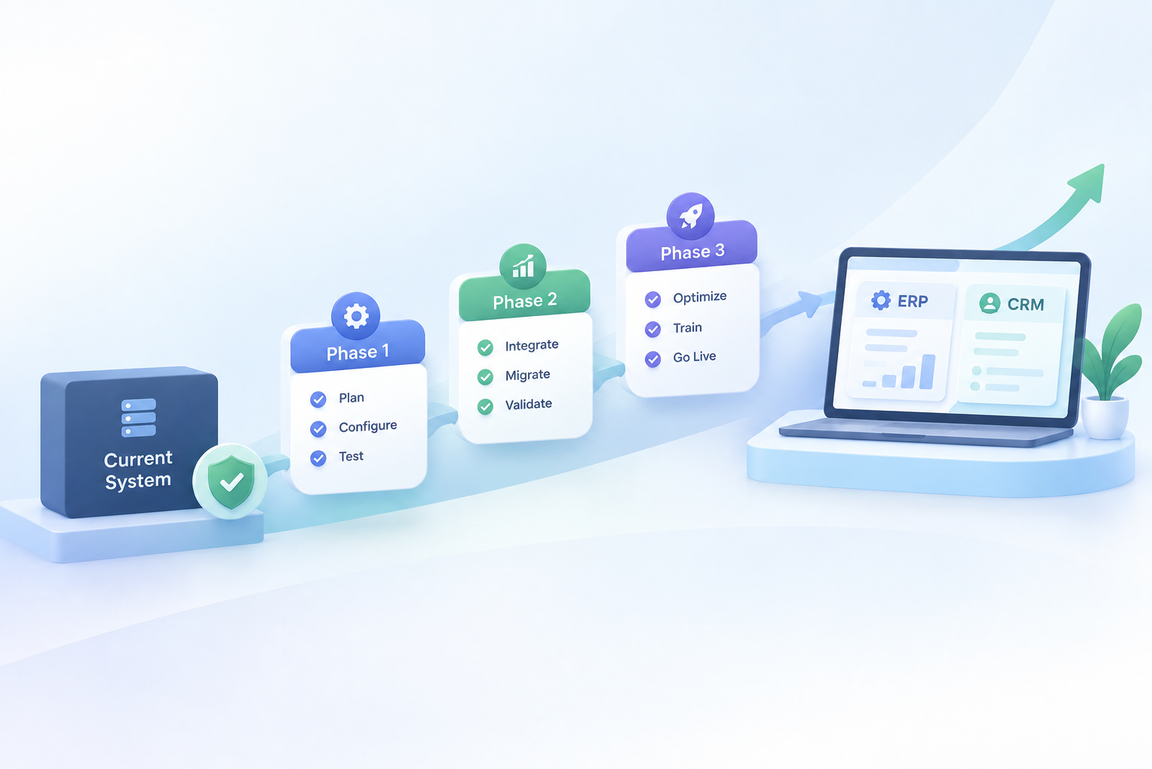
Every BFSI or fintech leader we’ve worked with has heard the same horror story at least once — a bank or NBFC switches on a new core system overnight, and for three weeks nobody can process loan disbursements properly. That’s the risk of a “big-bang” ERP or CRM rollout, and it’s exactly why phased implementation […]

POPULAR TAG

POPULAR CATEGORIES