

Loading...

Why UPI and Digital Payment Platforms Need Continuous Security Audits, Not Just Annual Ones

Why UPI and Digital Payment Platforms Need Continuous Security Audits, Not Just Annual Ones

Last year, one of our fintech clients came to Speqto Technologies after a routine penetration test revealed something unsettling: an old API endpoint from a UPI collect-request feature, deprecated eight months earlier, was still live and accessible. Nobody had decommissioned it properly. It wasn’t being exploited yet, but it was a wide-open door. This is the kind of gap that doesn’t show up in a checklist audit done once a year — it shows up when someone is actually looking, continuously.

UPI processes over 14 billion transactions a month in India now. That scale is a genuine success story, but it also makes every payment app, PSP, and bank-integrated platform a high-value target. The problem is that most organizations still treat security audits like a compliance formality — something you do before a launch or before an RBI inspection, then forget about until next year. That approach doesn’t hold up against how fast attack surfaces change in fintech.

The Attack Surface Changes Faster Than the Audit Cycle

A UPI app today isn’t a static piece of software. It’s constantly shipping new features — bill pay, recurring mandates, UPI Lite, credit line on UPI, third-party app provider (TPAP) integrations. Every new feature is a new set of APIs, new third-party SDKs, and new data flows between the app, the bank, NPCI, and the PSP.

An annual audit captures a snapshot of your app as it was on audit day. Six weeks later, a new feature ships with a new webhook that wasn’t reviewed. That’s exactly how the gap we found for our client happened — the deprecated endpoint was added during a feature audit, but nobody re-scanned the app after the feature was rolled back.

Real Attack Patterns We See in Payment Apps

  • Fake UPI apps and cloned APKs: Fraudsters routinely clone the UI of legitimate PSP apps and distribute them via SMS links, capturing UPI PINs directly. This isn’t a hypothetical — it’s been reported repeatedly by CERT-In and state cyber cells over the past two years.
  • QR code tampering: Static QR codes at merchant counters get physically swapped or digitally altered to redirect payments. This is a merchant-side risk that payment platforms often don’t audit because they assume it’s “not our infrastructure.”
  • Session and token replay: Weak session invalidation after app reinstall or SIM swap can let an attacker reuse an old auth token. We’ve flagged this exact issue in two separate client reviews where session tokens didn’t expire on device change.
  • API abuse via rate-limit gaps: Balance-check or beneficiary-verification APIs without proper throttling can be scripted to enumerate account details at scale. This is a classic issue that surfaces only under load testing, not in a code walkthrough.
  • Third-party SDK risk: Analytics and crash-reporting SDKs bundled into payment apps sometimes have broader permissions than needed, creating a data leak vector that has nothing to do with your own code.

Regulatory Pressure Is Only Going to Increase

RBI’s guidelines on digital payment security, NPCI’s operational circulars, and the CERT-In reporting mandates aren’t static documents — they get updated in response to actual incidents. A platform that passed its audit against last year’s requirements can be non-compliant today without a single line of code changing, simply because the baseline moved. Continuous audits keep you aligned with a moving regulatory target instead of scrambling to catch up before the next inspection.

What “Continuous” Actually Means in Practice

Continuous security audit doesn’t mean running the same scan every week. For a payment platform, it typically means:

  • Automated static and dynamic code scanning tied to every release, not just major ones
  • Quarterly VAPT (vulnerability assessment and penetration testing) with fresh attack scenarios based on current fraud trends
  • API-specific security testing whenever a new integration goes live — including with NPCI, banking partners, or third-party lending modules
  • Periodic red-team exercises that simulate real fraud patterns, like social engineering combined with app cloning
  • Ongoing dependency and SDK audits, since a vulnerable third-party library can undo months of internal hardening

For the client mentioned earlier, we moved them from a once-a-year external audit to a rolling quarterly review cycle combined with automated scanning on every deployment. Within the first two quarters, we caught three medium-severity issues before they reached production — none of which would have been visible under their old annual schedule.

The Cost Argument Decision-Makers Actually Care About

A continuous audit program costs a fraction of what a single data breach does — not just in regulatory fines, but in customer trust that’s genuinely hard to rebuild in payments. Users switch UPI apps easily; there’s very little switching cost. One publicized breach or even a string of fraud complaints can undo years of acquisition spend.

For BFSI and fintech leaders, the question isn’t whether to audit — it’s whether your audit cadence matches your release cadence. If your product team ships every two weeks and your security review happens once a year, you already have a gap, whether or not it’s been exploited yet.

At Speqto Technologies, we work with payment platforms specifically to close that gap — building audit cycles that move as fast as the product does, not the other way around.

RECENT POSTS

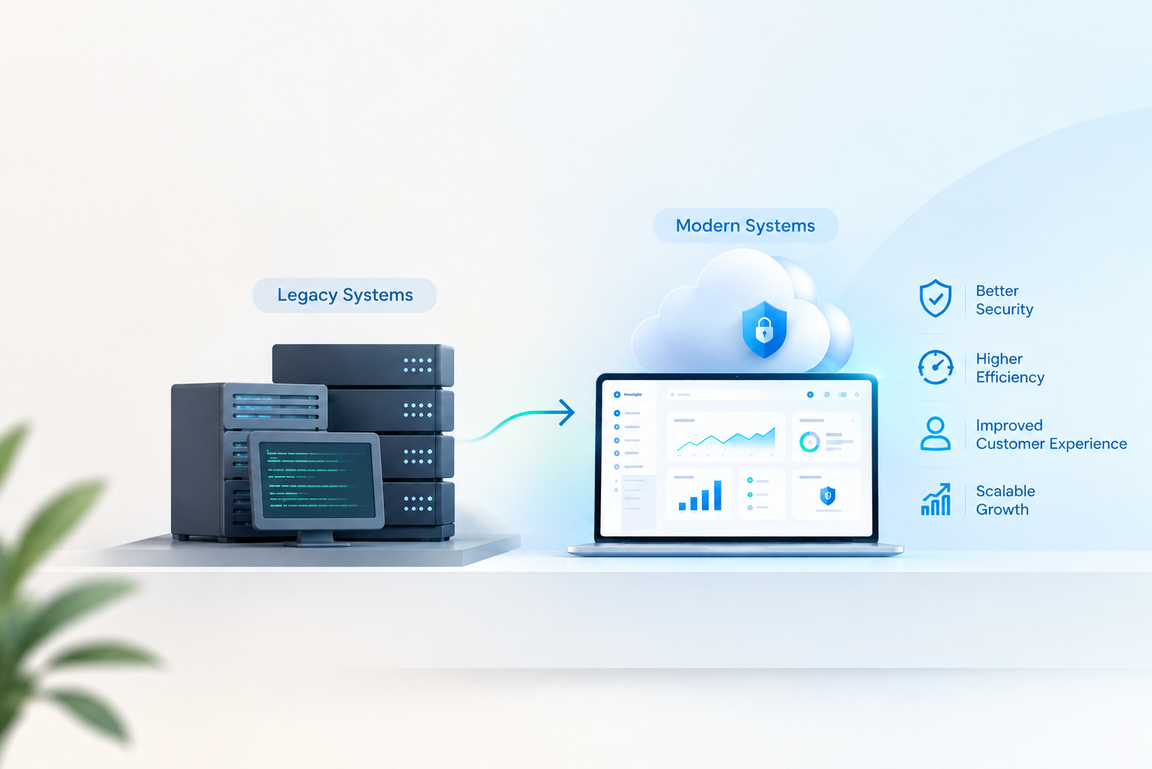
Legacy System Modernization in BFSI: A Practical Roadmap That Actually Works

A few months back, we sat across a CTO of a mid-sized NBFC who told us something we hear a lot: “Our loan management system works fine, until it doesn’t.” That “doesn’t” usually happens during month-end reconciliation, or worse, during an RBI audit when someone needs a report the 15-year-old system was never designed to […]

Why UPI and Digital Payment Platforms Need Continuous Security Audits, Not Just Annual Ones

Why UPI and Digital Payment Platforms Need Continuous Security Audits, Not Just Annual Ones Last year, one of our fintech clients came to Speqto Technologies after a routine penetration test revealed something unsettling: an old API endpoint from a UPI collect-request feature, deprecated eight months earlier, was still live and accessible. Nobody had decommissioned it […]

DevSecOps: Integrating Security into DevOps

Author: Charu RajputDate: 6 March 2026 Introduction Modern software development moves very fast with DevOps practices such as Continuous Integration (CI) and Continuous Deployment (CD). While speed improves productivity, it can also introduce security risks if security checks are ignored. This is where DevSecOps comes in. DevSecOps means integrating security into every stage of the […]

Beyond the Battlefield: Architecting Your Web App with Optimal SSR or CSR Rendering

Beyond the Battlefield: Architecting Your Web App with Optimal SSR or CSR Rendering Gaurav Garg 06 March 2026 In the dynamic landscape of web development, a fundamental architectural decision often dictates the success and user experience of a web application: the choice between Server-Side Rendering (SSR) and Client-Side Rendering (CSR). This isn’t merely a technical […]

How IT Companies Can Win Global Clients in 2026

How IT Companies Can Win Global Clients in 2026   Chirag Verma 06/03/2026 In 2026, the global technology market is more competitive and opportunity-rich than ever before. Businesses across industries are searching for reliable IT partners who can help them innovate, scale, and stay ahead in an increasingly digital world. For IT companies, winning global […]

POPULAR TAG

POPULAR CATEGORIES