The Ethics of Employee Monitoring Tools – Balancing Productivity Tracking with Employee Trust and Privacy
25/09/2025

In today’s fast-paced digital workplace, organizations are increasingly turning to employee monitoring tools to track productivity, ensure accountability, and maintain operational efficiency. From keystroke loggers and screen recording software to time-tracking dashboards and AI-powered analytics, these tools promise employers valuable insights into how work gets done.
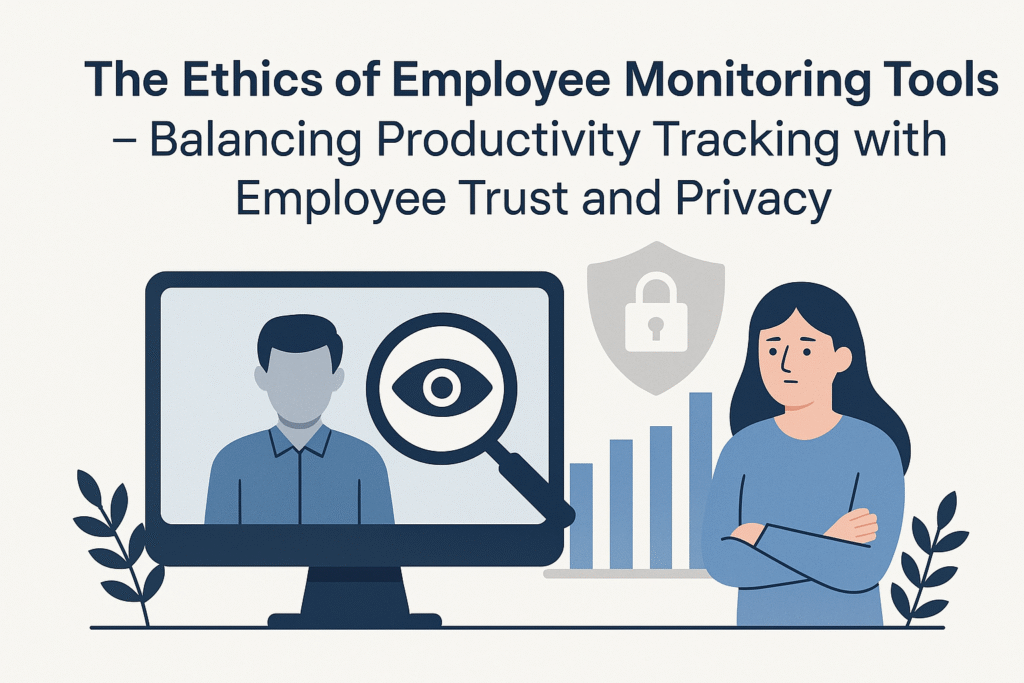
But while monitoring technology can boost efficiency, it also raises an important question: Where do we draw the line between productivity tracking and employee privacy?
Why Companies Use Monitoring Tools
- Productivity & Performance: Monitoring helps managers understand how employees spend their time and identify bottlenecks.
- Security Concerns: In industries dealing with sensitive data, tracking ensures compliance and prevents data leaks.
- Remote Work Management: As hybrid and remote work models grow, companies feel the need to track visibility and engagement.
These are valid business reasons, but the ethical dilemma lies in how much monitoring is too much.
The Privacy vs. Trust Dilemma
Excessive surveillance can send a dangerous message: “We don’t trust you.”
When employees feel constantly watched, it can lead to:
- Stress and burnout
- Lower job satisfaction
- Reduced creativity and innovation
- Higher turnover rates
On the other hand, a complete lack of oversight can make it difficult for organizations to measure effectiveness or ensure fairness.
The Ethical Balancing Act
For monitoring to be ethical, companies need to strike a balance:
- Transparency First: Employees should know what is being tracked, why, and how the data will be used.
- Purpose Limitation: Monitoring should focus on productivity—not personal life.
- Consent & Communication: Involve employees in the conversation before rolling out tools.
- Minimal Intrusion: Track only what is necessary—avoid invasive tools like webcam surveillance unless legally and ethically justified.
- Use Data Responsibly: Monitoring insights should improve workflows, not micromanage or punish unfairly.
Building Trust in the Digital Workplace
Ethical monitoring isn’t about control—it’s about creating a culture of accountability and respect. When organizations are upfront and employees feel their privacy is valued, monitoring can actually strengthen trust instead of breaking it.
In the long run, companies that respect employee boundaries not only see higher productivity but also build stronger loyalty and workplace morale.
✅ Key Takeaway:
Monitoring tools can be powerful, but their success depends on how ethically they’re used. Striking the right balance between business efficiency and employee trust is no longer optional—it’s the foundation of a sustainable, people-first workplace.