
Serverless Backend with AWS Lambda and API Gateway
Serverless architectures let you build and scale APIs without managing servers. This guide shows backend developers how AWS Lambda and API Gateway work together to create fast, cost-effective, event-driven backends. You’ll learn basic setup, configuration steps, and best practices so you can deploy serverless APIs in hours, not days.
By using AWS’s fully managed services, your team can focus on writing code instead of handling infrastructure tasks like patching, scaling, and monitoring.
Problem Statement
Traditional backends require provisioning servers, applying updates, and configuring scaling rules. These tasks consume time and budget. When traffic spikes unexpectedly, you risk slow responses or wasted resources.
Serverless backends solve these issues by automatically managing infrastructure, offering built-in high availability, and charging only for actual usage.
Our Approach to Serverless Backends
At Speqto, we design serverless APIs with clear event sources—such as HTTP requests via API Gateway or data changes in DynamoDB. We split logic into small Lambda functions and assign minimal IAM permissions to each function. Monitoring and tracing (with CloudWatch and X-Ray) are integrated from the start so we can see exactly how requests flow.
We begin with a simple prototype (one endpoint, one function) and then use Infrastructure as Code (AWS SAM or CloudFormation) for repeatable deployments.
Tools and Techniques We Use
– AWS Lambda – Run Node.js or Python code. Package dependencies as ZIP files or container images.
– Amazon API Gateway – Define REST endpoints with Lambda proxy integration, custom domains, and throttling.
– AWS SAM – Use `template.yaml` to declare functions, APIs, and IAM roles. Deploy with `sam build` and `sam deploy`.
– CloudWatch – Collect logs, set up metrics, and configure alarms for errors and latency.
– AWS X-Ray – Trace requests end-to-end to identify performance bottlenecks.
Tips and Best Practices
– Reduce cold starts: Enable provisioned concurrency for critical functions to maintain sub-100 ms latency.
– Cache responses: Use API Gateway stage caching for GET requests to cut Lambda calls up to 70%.
– Secure configuration: Store secrets in Parameter Store and use environment variables—never hard-code credentials.
– Cost optimization: Monitor function duration and memory use. Adjust memory settings to balance performance and price.
Data and Examples
In one Speqto migration, moving from EC2 to Lambda + API Gateway reduced costs by 60%, automatically scaled to 2,000 requests/second, and cut 85% of maintenance work.
Benchmark results showed cold start latency drop from 400 ms to 120 ms with provisioned concurrency, and a steady p50 latency of 30 ms under 500 RPS.
Visuals
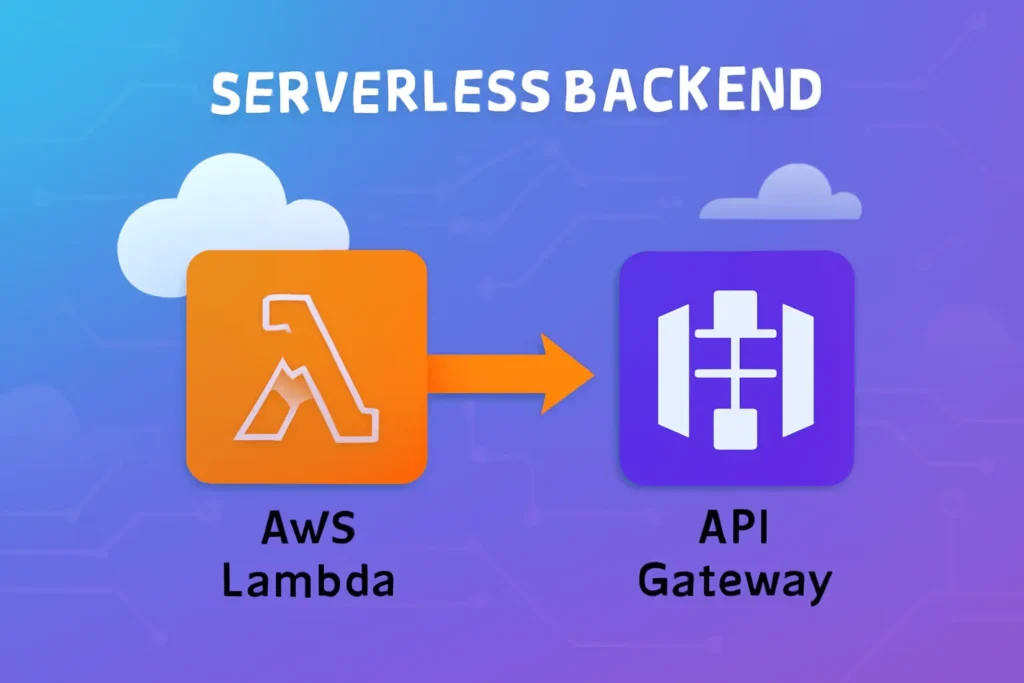
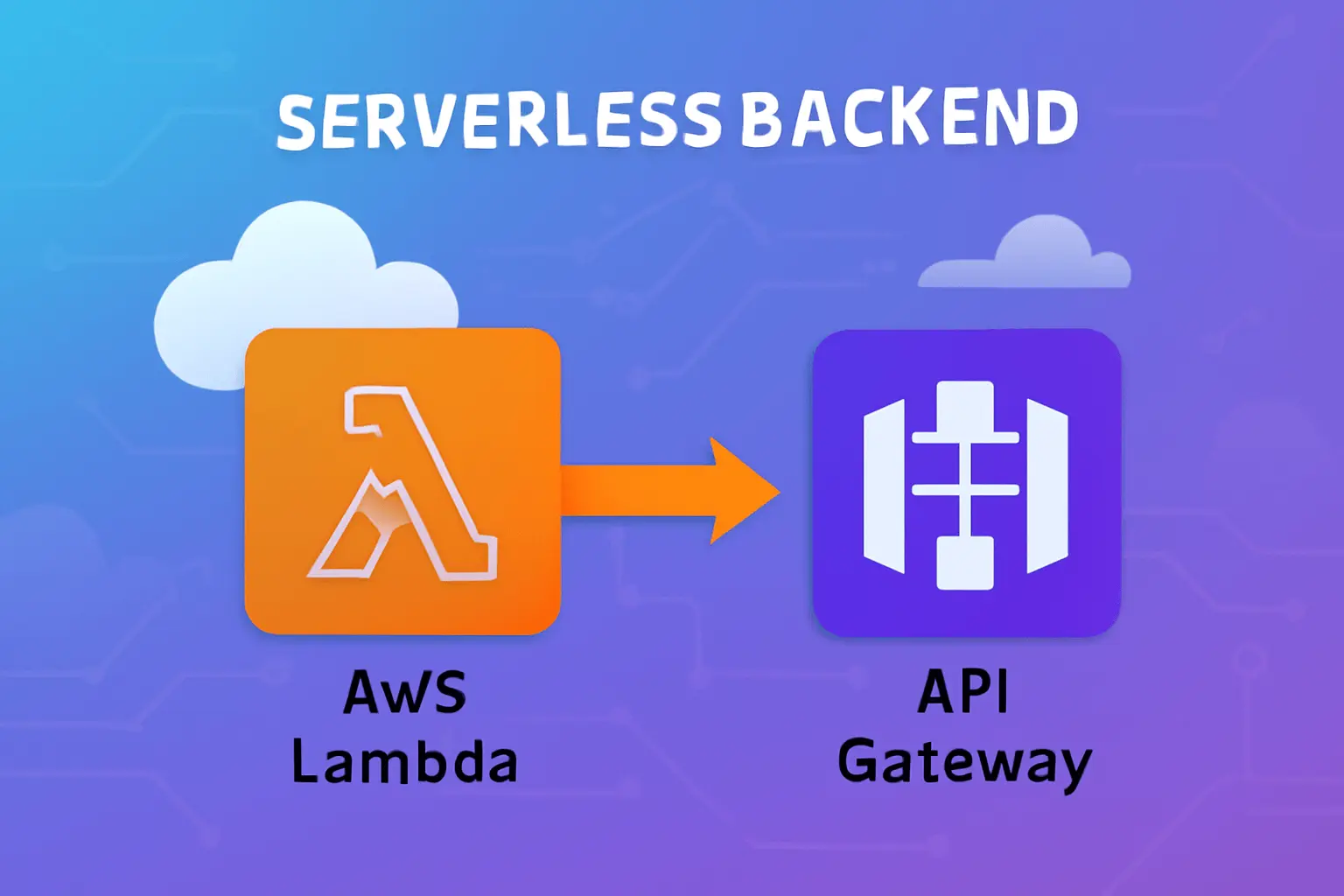
Diagram: Client → API Gateway → Lambda → DynamoDB. Alt text: “Serverless backend architecture with AWS Lambda and API Gateway.”
Real-Life Example: Speqto’s Serverless Migration
Speqto replaced a monolithic Java API on EC2 with lightweight Node.js Lambdas. Deployments now take minutes using AWS SAM, and the system auto-scales during peak loads, reducing incident response by 90%.
Conclusion
AWS Lambda and API Gateway enable teams to build scalable, cost-effective backends without server management. Start with a small prototype, automate deployments, and optimize iteratively to fully leverage serverless benefits.
Have questions or need help? Reach out to Speqto’s cloud solutions team today.