


Loading...

Reducing Loan Processing Time Through Workflow Automation: What Actually Works

If you’ve spent any time in lending operations, you already know the real cost of a slow loan cycle isn’t just customer frustration — it’s lost business. A borrower who waits 10 days for approval has usually applied with two other lenders in the meantime. We’ve seen this play out repeatedly with our BFSI clients at Speqto Technologies, and it’s why loan processing automation has become one of the most requested projects on our desk over the last two years.

This isn’t a theoretical discussion. We want to walk through where the time actually gets lost in a typical loan cycle, and what automation genuinely fixes versus what it just makes look faster on paper.

Where the Time Really Goes

When we audited the loan origination process for a mid-sized NBFC client last year, we expected the bottleneck to be credit underwriting. It wasn’t. Nearly 40% of the total processing time was lost in three places that had nothing to do with risk assessment:

  • Document collection and re-collection (borrowers submitting incomplete KYC, staff manually chasing follow-ups over email and phone)
  • Internal handoffs between sales, credit, and operations teams sitting in different systems with no shared visibility
  • Manual data entry from scanned documents into the core loan management system

Underwriting itself, once the file was complete and clean, took barely two days. The “waiting around” in between was eating up to two weeks.

What Workflow Automation Actually Changes

For that NBFC, we built an automated workflow layer that sat between their customer-facing application and their core LOS (loan origination system). Three things made the biggest difference:

1. Document Intake with OCR and Validation Rules

Instead of a loan officer manually checking whether a submitted Aadhaar card or salary slip was legible and complete, we set up OCR-based extraction with built-in validation rules. If a document was blurry, mismatched, or missing a required field, the system flagged it back to the applicant instantly through the portal — no human in the loop needed at that stage. This single change cut document resubmission cycles from an average of 3 days to under 4 hours.

2. Rule-Based Routing Instead of Manual Assignment

Previously, every file landed in a shared inbox and got picked up based on whoever was free — which meant files sat untouched for hours, sometimes overnight. We configured automated routing based on loan type, ticket size, and risk category, so a personal loan under ₹2 lakh with a clean CIBIL score went straight to an auto-decisioning engine, while higher-ticket or flagged files were routed to the right underwriter automatically, with SLA timers attached. Nobody had to “remember” to assign anything.

3. Status Visibility Across Teams

A surprising chunk of delay came from sales teams calling credit teams asking “where’s this file?” We replaced that with a shared dashboard showing real-time status, so that back-and-forth disappeared almost entirely. It sounds small, but across a team processing 500+ applications a month, it saved hundreds of man-hours.

The Results, Honestly Stated

For this client, average loan processing time dropped from 11 days to 3.5 days within the first quarter of going live. We’re not claiming automation alone did this — some of it came from tightening up their credit policy documentation alongside the tech rollout. But the operational drag that automation removed was the single biggest contributor.

In a separate engagement with a digital lending fintech focused on SME loans, the challenge was different: their volumes were lower, but their underwriting involved pulling GST returns, bank statements, and bureau data from multiple sources manually. We integrated API-based data pulls directly into their workflow engine so that the moment an application was submitted, the system fetched and pre-populated 80% of the required financial data. Their underwriters went from spending 45 minutes per file on data gathering to under 10 minutes.

What We’d Tell Any BFSI Leader Considering This

A few honest lessons from these projects:

  • Automate the handoffs and data collection first — not the underwriting decision itself. Trust in the system builds gradually, and most time savings come from the boring middle steps anyway.
  • Don’t automate a broken process. If your document checklist is unclear or your credit policy has gray areas, automation will just make bad decisions faster.
  • Keep a manual override path. Regulators and auditors will ask for it, and your underwriters will trust the system more if they know they can step in when something looks off.
  • Measure before you build. We couldn’t have targeted the right fixes for either client without first mapping exactly where time was being lost.

Where This Is Heading

We’re now seeing more of our BFSI clients ask for predictive elements layered on top of workflow automation — flagging files likely to get stuck in underwriting before they actually do, based on patterns from past rejections and delays. That’s the next real gain: not just moving files faster, but preventing them from getting stuck in the first place.

If loan processing time is a recurring pain point for your team, the fix usually isn’t a complete system overhaul. It’s finding the three or four places where files sit idle and building targeted automation around exactly those gaps. That’s been our experience across every lending client we’ve worked with, and it’s usually where the fastest, most measurable wins are hiding.

RECENT POSTS

Reducing Loan Processing Time Through Workflow Automation: What Actually Works

If you’ve spent any time in lending operations, you already know the real cost of a slow loan cycle isn’t just customer frustration — it’s lost business. A borrower who waits 10 days for approval has usually applied with two other lenders in the meantime. We’ve seen this play out repeatedly with our BFSI clients […]
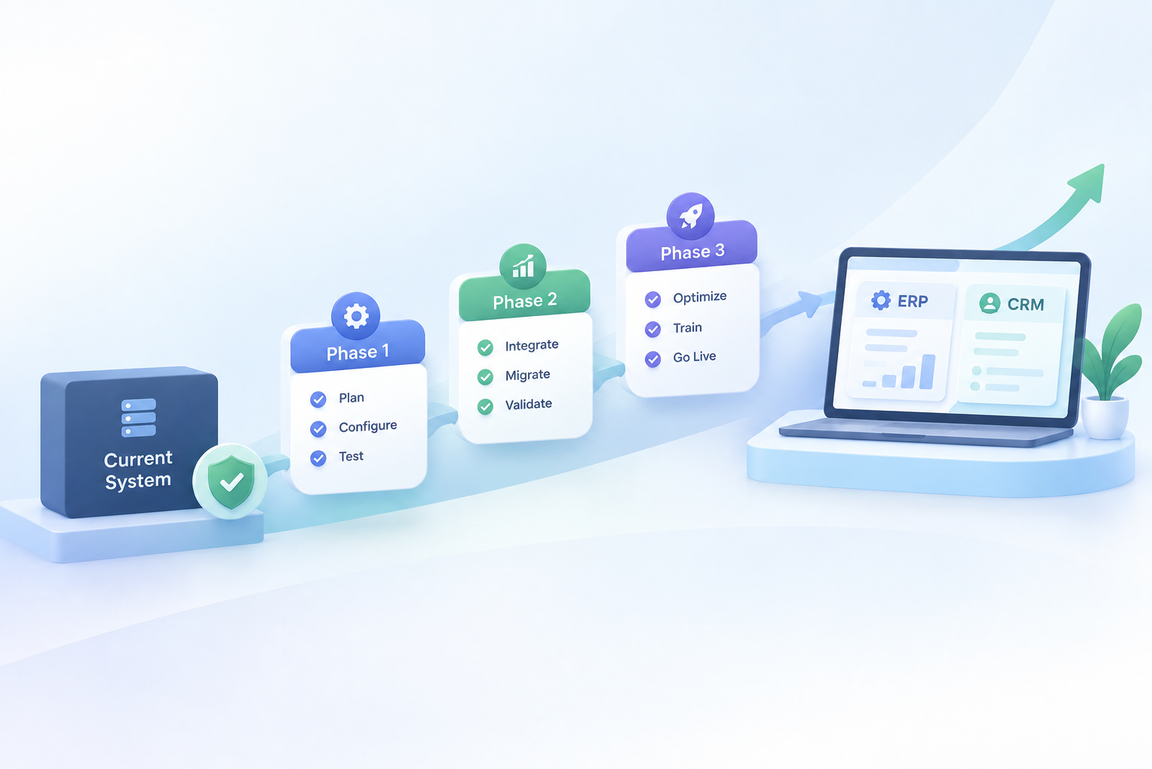

How to Plan a Phased ERP or CRM Implementation Without Breaking What Already Works

Every BFSI or fintech leader we’ve worked with has heard the same horror story at least once — a bank or NBFC switches on a new core system overnight, and for three weeks nobody can process loan disbursements properly. That’s the risk of a “big-bang” ERP or CRM rollout, and it’s exactly why phased implementation […]

Why Microservices Architecture Reduces Long-Term Maintenance Cost (A BFSI Perspective)

Every BFSI and fintech leader we’ve worked with at Speqto Technologies eventually asks us the same question: “Our monolith works fine today, so why should we spend money breaking it apart?” Fair question. The honest answer is — you shouldn’t do it for today. You do it for the three years after today, when your […]

Building Customer-Facing Portals for Financial Institutions: What Actually Works

Over the last few years, our team at Speqto Technologies has built portals for NBFCs, cooperative banks, insurance brokers, and a couple of wealth management firms. One thing that keeps surprising clients: the hardest part is rarely the UI. It’s getting core banking integrations, compliance workflows, and support escalation to work together without the whole […]

How AI Can Improve Fraud Detection in Banking Systems: What Actually Works

Most banks we talk to aren’t short on fraud rules. They have hundreds of them — thresholds on transaction amount, geography mismatches, velocity checks, blacklisted IFSC codes. The problem isn’t the lack of rules; it’s that fraudsters have learned to operate just below every threshold. That’s where AI earns its place, not as a buzzword, […]

POPULAR TAG

POPULAR CATEGORIES