
Loading...

Introduction

In the DevOps world, containerization has transformed how applications are built, deployed, and scaled. Among container orchestration platforms, Amazon Elastic Container Service (ECS) stands out for its simplicity, scalability, and deep integration with other AWS services.These issues can cause delays in continuous delivery pipelines, increase network bandwidth usage, and lead to unnecessary AWS costs.

Optimizing Docker images is therefore not just about performance it’s about efficiency, cost control, and deployment reliability.

Understanding Docker Image Optimization

A Docker image is essentially a layered file system that contains everything your application needs to run including the operating system, dependencies, libraries, and configuration files.
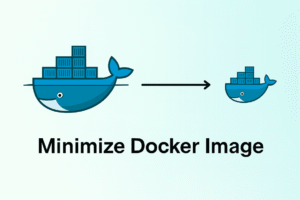
When an image is poorly structured or includes unnecessary components, it grows in size. Large images take longer to build, push, pull, and deploy to ECS.

Optimizing Docker images means refining each layer to include only what’s essential for your application. This improves speed, security, and stability.

Why Optimization Is Important for AWS ECS

When using ECS  whether with EC2 or Fargate Docker image size and structure directly affect:

  1. Deployment Speed – ECS tasks pull the image from ECR each time a new service or revision starts. Smaller images download faster, leading to reduced downtime.

  2. Build Time in CI/CD – Optimized images reduce build times, accelerating your development cycle.

  3. Storage Costs – Amazon ECR charges for storage; smaller images reduce costs significantly.

  4. Security and Maintenance – Fewer dependencies mean fewer vulnerabilities and less maintenance overhead.

In short: smaller, cleaner images = faster ECS deployment and smoother scaling.

Key Techniques for Optimizing Docker Images

1. Choose Lightweight Base Images

The choice of a base image is crucial. Heavy base images like Ubuntu or Debian come with unnecessary packages that increase image size. Instead, use minimal images such as Alpine Linux.

2. Use Multi-Stage Builds

In a multi-stage build, you separate your build environment from the runtime environment. This means only the essential compiled or built files go into the final image.

This technique significantly reduces the final image size and eliminates unnecessary build dependencies from production images.

3. Leverage Docker Layer Caching

Docker builds images in layers. If your layers are structured correctly, Docker can reuse previously built layers. This saves build time, especially in CI/CD pipelines.

The general rule is: place frequently changing files at the bottom and rarely changing files at the top of your Dockerfile to maximize cache efficiency.

4. Remove Unnecessary Files and Packages

Always clean up temporary files, caches, and logs created during builds.
By doing this, the Docker build context remains minimal, leading to faster builds and smaller image sizes.

5. Implement Security and Version Pinning

When pulling base images or dependencies, avoid using latest tags. Always pin specific versions 
This ensures consistent builds and prevents unexpected behavior when base images are updated.

Optimized images also reduce the attack surface by including only what’s needed — an essential aspect of DevSecOps best practices.

 Integrating with AWS ECR and ECS

After creating an optimized Docker image, it is stored in Amazon Elastic Container Registry (ECR). When you deploy an ECS service, ECS pulls the image from ECR to run tasks.

An optimized image reduces:

  • The time taken to pull images from ECR.

  • The network bandwidth used during deployments.

  • The startup time of ECS tasks or services.

This leads to smoother blue-green deployments and faster application rollouts in production.

 The Benefits in Numbers

Metric Before Optimization After Optimization
Image Size ~900 MB ~150 MB
ECS Deployment Time ~5 minutes ~2 minutes
CI/CD Build Time ~6 minutes ~3 minutes
Security Vulnerabilities High Minimal

These optimizations not only improve performance but also help reduce AWS costs and enhance system reliability.

Conclusion

Optimizing Docker images is one of the simplest yet most impactful improvements DevOps engineers can make in their AWS ECS workflows.

By adopting lightweight base images, multi-stage builds, efficient caching, and proper cleanup, teams can achieve faster build cycles, quicker ECS deployments, and significant cost savings.

RECENT POSTS

The Impact of Retention on Company Culture: Why Keeping Employees Matters More Than Ever

The Impact of Retention on Company Culture: Why Keeping Employees Matters More Than Ever Khushi Kaushik 08 dec, 2025 In today’s competitive business landscape, organizations are investing heavily in hiring the best talent— but the real challenge begins after onboarding. Employee retention is no longer just an HR metric; it has become a defining factor […]

How a BDE Connects Business Vision With Technology

How a BDE Connects Business Vision With Technology Kumkum Kumari                                                              21/11/2025At Speqto, we work with organizations that are constantly evolving entering new markets, scaling operations, or […]

Apache JMeter Demystified: Your 7-Stage Blueprint for a Seamless First Performance Test

Apache JMeter Demystified: Your 7-Stage Blueprint for a Seamless First Performance Test Megha Srivastava 21 November 2025 In the intricate world of software development and deployment, ensuring a robust user experience is paramount. A slow application can quickly deter users, impacting reputation and revenue. This is where Apache JMeter emerges as an indispensable tool, offering […]

STRIDE Simplified: A Hands-On Blueprint for Pinpointing Software Threats Effectively

STRIDE Simplified: A Hands-On Blueprint for Pinpointing Software Threats Effectively Megha Srivastava 21 November 2025 In the intricate landscape of modern software development, proactive security measures are paramount. While reactive incident response is crucial, preventing vulnerabilities before they become exploits is the hallmark of robust software engineering. This is where threat modeling, and specifically the […]

From Static to Streaming: A Practical Developer’s Guide to Real-time Applications Using GraphQL Subscriptions

From Static to Streaming: A Practical Developer’s Guide to Real-time Applications Using GraphQL Subscriptions Shakir Khan 21 November 2025 The Paradigm Shift: From Static to Streaming Experiences In an era where user expectations demand instant gratification, the web has rapidly evolved beyond its static origins. Today, a modern application’s success is often measured by its […]

POPULAR TAG

POPULAR CATEGORIES