

Loading...

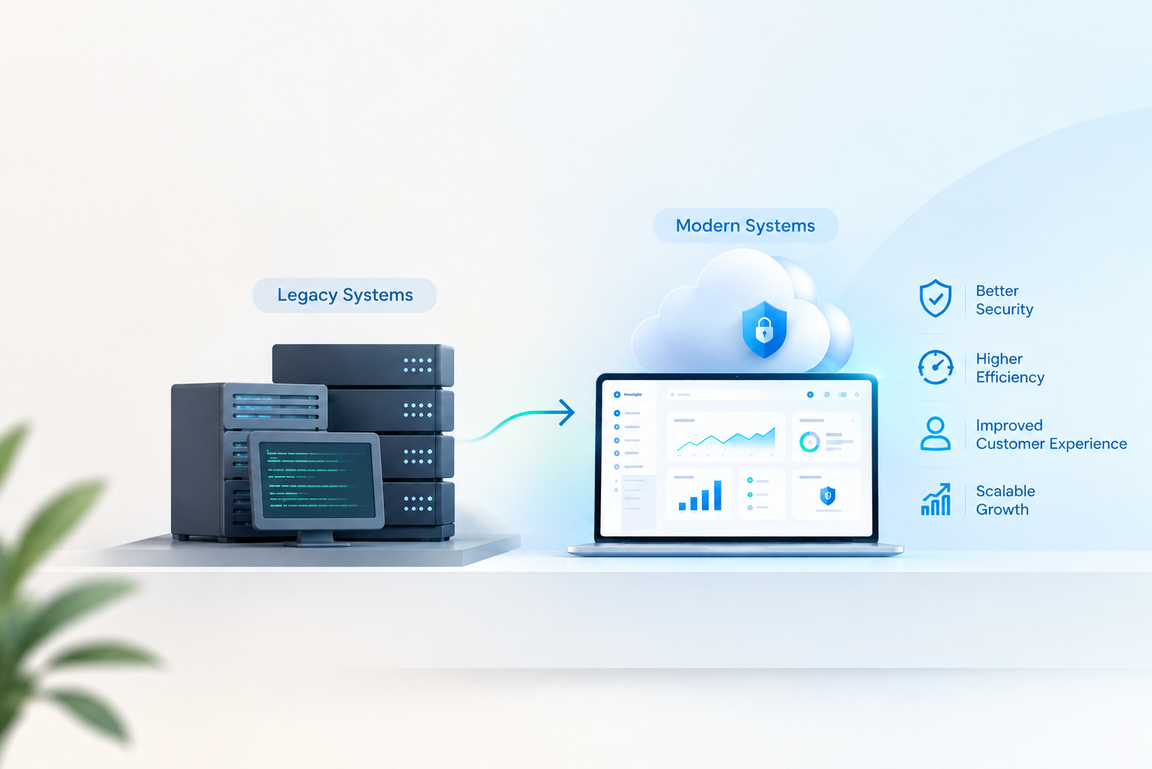
Legacy System Modernization in BFSI: A Practical Roadmap That Actually Works

A few months back, we sat across a CTO of a mid-sized NBFC who told us something we hear a lot: “Our loan management system works fine, until it doesn’t.” That “doesn’t” usually happens during month-end reconciliation, or worse, during an RBI audit when someone needs a report the 15-year-old system was never designed to generate.

At Speqto Technologies, we’ve worked on enough BFSI modernization projects to know that legacy modernization isn’t really about swapping old code for new. It’s about untangling two decades of business logic, undocumented workarounds, and institutional memory that lives in three people’s heads instead of in documentation. Here’s how we approach it, and what actually moves the needle.

1. Start With an Honest Audit, Not a Wishlist

Every modernization project we’ve seen fail started with someone in leadership saying “let’s move to microservices” before anyone had mapped what the current system actually does. For a cooperative bank we worked with, the core banking system had over 40 undocumented batch jobs running nightly – some of which nobody could explain but everyone was afraid to touch.

Before writing a single line of new code, we spend 3-4 weeks doing what we call a “dependency and risk audit”: tracing data flows, identifying which modules touch regulatory reporting, and flagging the parts of the system where tribal knowledge, not documentation, is keeping things running.

2. Don’t Modernize Everything at Once

This is where most BFSI projects go wrong. A big-bang rewrite sounds efficient on a slide deck but is a nightmare in a live financial environment where you can’t have downtime during settlement cycles.

For an insurance client handling claims processing, we broke the modernization into three phases:

  • Phase 1: Modernize the claims intake and document verification module (customer-facing, high friction, low regulatory risk)
  • Phase 2: Rebuild the underwriting rules engine (business-critical, needed parallel run for 60 days)
  • Phase 3: Migrate policy data to the new database architecture (highest risk, done last with full rollback plans)

This strangler-fig approach – gradually replacing old components while the legacy system keeps running – meant the client never had a single day of service disruption across an 11-month project.

3. Treat Compliance as an Input, Not an Afterthought

In fintech and BFSI, modernization without compliance mapping is how projects get delayed by six months right before go-live. RBI’s IT governance guidelines, data localization requirements, and audit trail expectations need to be baked into architecture decisions from day one, not bolted on before launch.

For one payments client, we built immutable audit logging into the new transaction engine from the start because retrofitting it later would have meant re-touching every service. That single decision saved roughly three weeks of rework during their compliance sign-off.

4. Run Parallel Systems Longer Than You Think You Need To

Everyone underestimates this. Teams get excited about the new system and want to cut over fast. We generally push clients toward parallel runs of 45-90 days for anything touching core ledgers or customer funds, comparing outputs line by line, not just spot-checking.

During a core banking migration for a regional bank, a parallel run caught a rounding discrepancy in interest calculation that only showed up on loans with specific tenure structures – something that would have caused real customer-facing errors if we’d cut over after two weeks like originally planned.

5. Migrate Data With a Cleansing Strategy, Not Just a Transfer Script

Legacy BFSI databases accumulate junk – duplicate KYC records, inconsistent date formats, customers with three different spellings of the same name. Moving this data as-is into a modern system just moves the mess.

We build a data quality layer as part of migration: deduplication logic, validation rules, and a manual review queue for records that fail automated checks. For the NBFC mentioned earlier, this process flagged nearly 8% of customer records with inconsistencies that had been silently causing reconciliation errors for years.

6. Train the Team Before Go-Live, Not After

New systems fail in production not because of bad code but because branch staff or ops teams don’t trust it yet and revert to manual workarounds. We schedule hands-on training and a “shadow period” where staff use the new system alongside their old habits, with real support available, not a PDF manual.

7. Measure Success Beyond “It’s Live”

Go-live is a milestone, not the finish line. We track post-launch metrics for 90 days: transaction failure rates, support ticket volume, processing time comparisons against the old system. That’s how you actually know if modernization delivered value or just changed the interface.

Final Thought

Legacy modernization in BFSI isn’t a technology project wearing a business hat – it’s a business continuity project that happens to involve technology. The teams that get this right treat every phase as reversible until proven otherwise. That mindset, more than any framework or tech stack, is what separates modernization projects that succeed from the ones that end up as case studies in what not to do.

RECENT POSTS

How E-Learning and EdTech Platforms Can Scale Using Microservices

Every edtech founder we’ve worked with at Speqto Technologies has faced the same 2 AM problem: the platform crashes right when 50,000 students log in for a live mock test, or the video server chokes during a scheduled webinar, or the payment gateway times out during a fee-payment rush before an admission deadline. If your […]

Why Regular Security Audits Matter for Banking-Adjacent Platforms

At Speqto Technologies, we’ve spent the last few years building and securing platforms that sit right next to banking rails — payment gateways, lending apps, wealth management dashboards, neobank front-ends. And if there’s one pattern we keep seeing, it’s this: companies invest heavily in their core product but treat security audits as a compliance checkbox […]

Choosing the Right Tech Stack for a Series A Fintech Startup

Once a fintech startup closes its Series A, the conversation in the boardroom shifts. It’s no longer just about proving the idea works — it’s about proving it can scale, survive an audit, and handle ten times the transaction volume without falling over. At Speqto Technologies, we’ve sat in on enough of these conversations with […]

How Kafka and Event-Driven Architecture Solve Data Sync Problems in BFSI Systems

Every BFSI or fintech platform we’ve worked with at Speqto Technologies eventually runs into the same wall: multiple systems — core banking, CRM, payment gateway, risk engine, notification service — all need the same piece of data, but they need it at different times, in different formats, and none of them trust the others to […]

Building Real-Time Dashboards for Operations and Compliance Teams: What Actually Works

A few months back, we sat in a review call with the ops head of a mid-sized NBFC. His complaint was simple: “By the time my team sees a problem in the report, the problem is already three hours old.” His compliance officer, sitting right next to him, had a similar issue — she was […]

POPULAR TAG

POPULAR CATEGORIES