

Loading...

Warning: Undefined array key "post_id" in /home/u795416191/domains/speqto.com/public_html/wp-content/themes/specto-fresh/single.php on line 22

Five Best Practices for Secure Event-Driven Backends on AWS

Shakir Khan

19 August, 2025


Five Best Practices for Secure Event-Driven Backends on AWS

Event-driven architecture lets apps react in real time while trimming polling costs and untangling microservices. But moving from synchronous REST calls to asynchronous events also changes the threat surface—payloads jump between accounts, and failures can hide in the background. Below are five field-tested practices that keep Amazon EventBridge-powered backends both agile and secure.

Problem Statement

Common pitfalls include over-permissive IAM, event spoofing, data leakage, and silent message loss. Teams need a defense-in-depth playbook that hardens every hop—from producer to consumer—without slowing delivery.

1. Apply Least-Privilege IAM on Every Hop

Grant producers only events:PutEvents on the target bus, limit rules to the exact lambda:InvokeFunction ARN, and give consumers minimal read/write rights to downstream resources. Lock down cross-account publishing with bus policies and AWS Organizations SCPs.

2. Validate and Encrypt Event Payloads

Register JSON schemas and enable “schema validation on publish” to block malformed events. Turn on KMS encryption for custom buses, encrypt sensitive fields inside payloads, and add an HMAC or signature the consumer Lambda must verify.

3. Isolate Workloads with Custom Event Buses

Create domain-specific buses like payments-prod and orders-stage. Use separate AWS accounts for lower-trust environments and restrict bus policies so only approved producers can publish and only scoped rules can forward events.

4. Build Defense-in-Depth with DLQs and Retries

Attach SQS dead-letter queues to every rule and Lambda. Configure exponential back-off to avoid retry storms, and alarm on DLQ depth; sudden spikes often signal schema drift or auth failures.

5. Monitor, Trace, and Automate Response

Stream FailedInvocations and ThrottledRules to CloudWatch; alert via SNS or Slack. Enable X-Ray tracing end-to-end and let EventBridge Scheduler trigger playbooks that rotate keys or quarantine functions when anomalies surface.

Advanced Hardening Tactics

• Use event versioning in the schema registry to roll out contract changes safely.
• Adopt service-to-service mTLS for producers that call the EventBridge API from containers.
• Enable VPC endpoints for EventBridge, SQS, and KMS to keep traffic off the public internet.
• Scan consumer Lambdas with Amazon Inspector to catch vulnerable packages as part of CI/CD.

Real-Time Response Automation

Combine EventBridge rules with AWS Systems Manager Automation to auto-isolate misbehaving functions. For example, when the DLQ depth for payments-prod exceeds 100 messages, trigger an SSM runbook that disables the offending Lambda alias, sends Slack alerts, and opens a Jira ticket—all within seconds.

Data and Examples

After Speqto applied these measures to its order-processing pipeline, high-severity incidents fell 83 %, IAM policy size shrank 72 %, and mean time to detect dropped from 43 minutes to 6 minutes.

Visuals

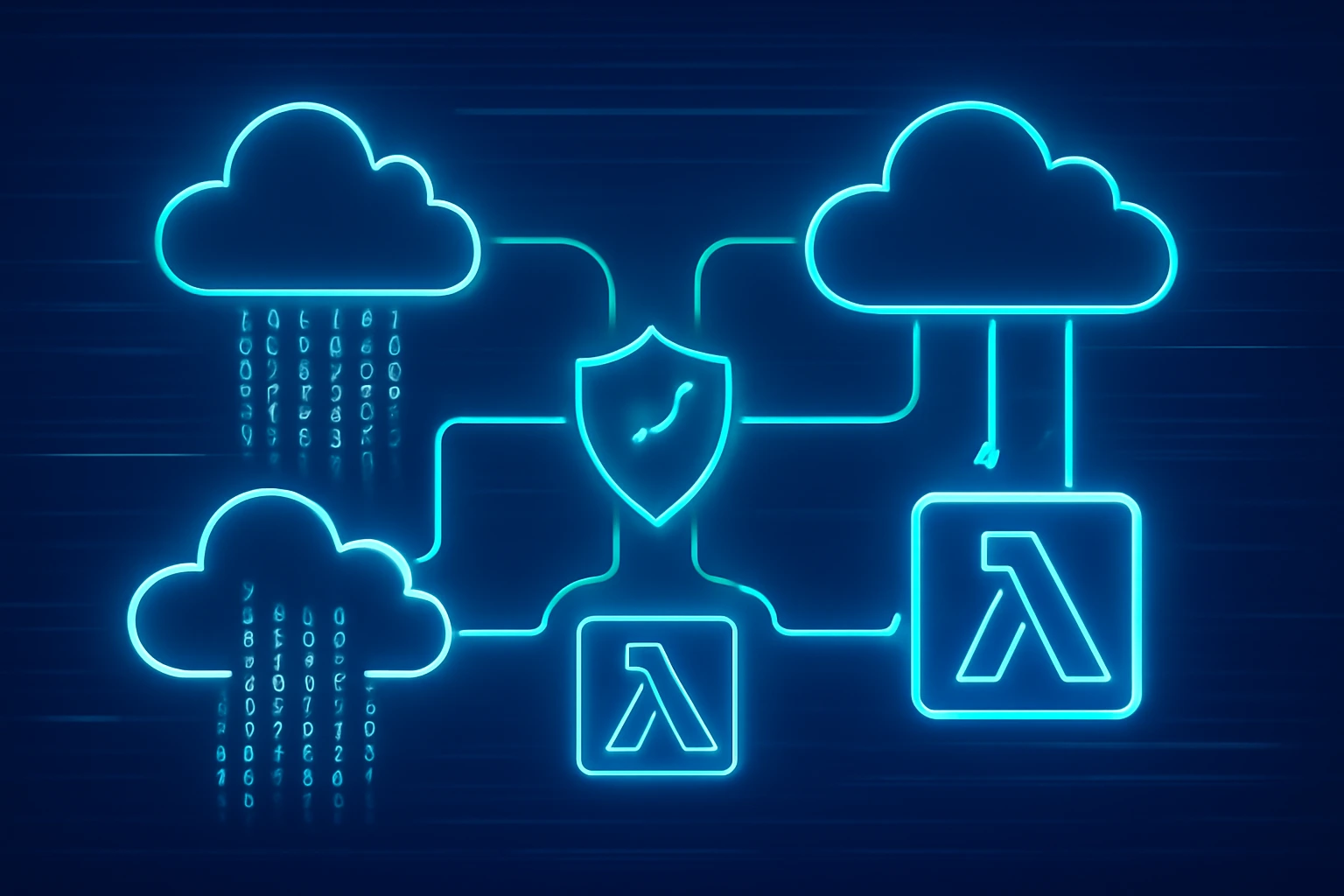
Diagram: Client → API Gateway → EventBridge Bus → Lambda Consumer (+ DLQ) → DynamoDB. Alt text: “Secure event-driven backend architecture on AWS.”

Conclusion

Event-driven backends shine at scale and agility—but only when built on a rock-solid security foundation. Follow least privilege, validate and encrypt every payload, isolate domains, add DLQs, monitor relentlessly, and automate your response. Ready to harden your pipeline? Speqto’s cloud specialists can run a security sprint and help you ship with confidence.

Need a second pair of eyes on your event architecture? Talk to Speqto’s AWS team for a tailored security review.

RECENT POSTS

Beyond the Battlefield: Architecting Your Web App with Optimal SSR or CSR Rendering

Beyond the Battlefield: Architecting Your Web App with Optimal SSR or CSR Rendering Gaurav Garg 06 March 2026 In the dynamic landscape of web development, a fundamental architectural decision often dictates the success and user experience of a web application: the choice between Server-Side Rendering (SSR) and Client-Side Rendering (CSR). This isn’t merely a technical […]

How IT Companies Can Win Global Clients in 2026

How IT Companies Can Win Global Clients in 2026   Chirag Verma 06/03/2026 In 2026, the global technology market is more competitive and opportunity-rich than ever before. Businesses across industries are searching for reliable IT partners who can help them innovate, scale, and stay ahead in an increasingly digital world. For IT companies, winning global […]

The Human Side of AI: How HR Leaders Will Shape the Future of Work in 2026

The Human Side of AI: How HR Leaders Will Shape the Future of Work in 2026 Khushi Kaushik 06 march, 2026 Introduction As we step into 2026, the workplace is evolving faster than ever before. Artificial Intelligence, automation, remote work, and digital collaboration tools are transforming how organizations operate. But amid all this innovation, one […]

Socket.IO Security Unveiled: Mastering Authentication & Authorization for Robust Real-time Applications

Socket.IO Security Unveiled: Mastering Authentication & Authorization for Robust Real-time Applications Divya Pal 4 February, 2026 In the dynamic landscape of modern web development, real-time applications have become indispensable, powering everything from chat platforms to collaborative editing tools. At the heart of many of these interactive experiences lies Socket.IO, a powerful library enabling low-latency, bidirectional […]

Prisma ORM in Production: Architecting for Elite Performance and Seamless Scalability

Prisma ORM in Production: Architecting for Elite Performance and Seamless Scalability Shubham Anand 16 February 2026 In the rapidly evolving landscape of web development, database interaction stands as a critical pillar. For many modern applications, Prisma ORM has emerged as a powerful, type-safe, and intuitive tool for interacting with databases. However, transitioning from development to […]

POPULAR TAG

POPULAR CATEGORIES