
Loading...

DevSecOps: Integrating Security into DevOps

Author: Charu Rajput
Date: 6 March 2026
Introduction

Modern software development moves very fast with DevOps practices such as Continuous Integration (CI) and Continuous Deployment (CD). While speed improves productivity, it can also introduce security risks if security checks are ignored.

This is where DevSecOps comes in.

DevSecOps means integrating security into every stage of the DevOps pipeline, instead of treating security as a separate process at the end.

Why DevSecOps is Important

Traditional security practices used to happen after development was completed. This caused several problems, such as:

  • Security vulnerabilities discovered late

  • Expensive fixes

  • Deployment delays

  • Higher risk of cyber attacks

DevSecOps solves this problem by shifting security left, meaning security checks start early in the development process.

Benefits of DevSecOps
  • Early detection of vulnerabilities

  • Faster and safer deployments

  • Better collaboration between teams

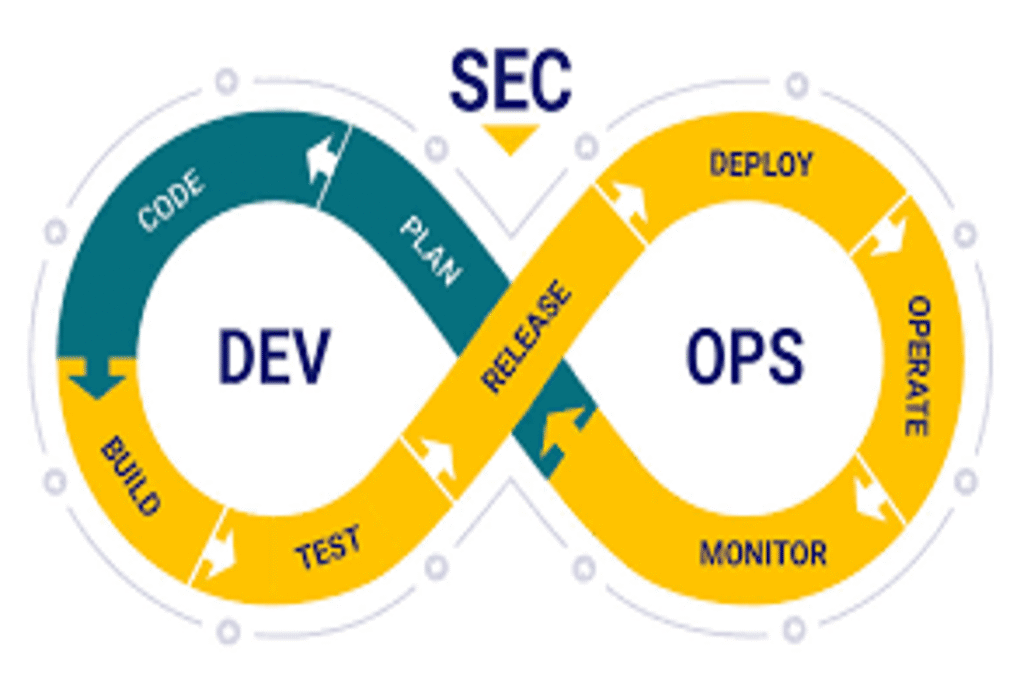
DevSecOps Lifecycle

DevSecOps integrates security across the entire DevOps pipeline.

1. Planning Stage

Security requirements are defined during the planning phase.

2. Development Stage

Developers write secure code using secure coding practices.

3. Build Stage

During the build process, security checks are automated.

4. Testing Stage

Applications are tested for security vulnerabilities before deployment.

5. Deployment Stage

Secure deployment ensures that infrastructure and applications are protected.

6. Monitoring Stage

After deployment, systems are continuously monitored for security threats.

Best Practices for Implementing DevSecOps
1. Shift Security Left

Integrate security early in the development process.

2. Automate Security Testing

Security tests should run automatically in CI/CD pipelines.

3. Secure Secrets Management

Never store credentials or secrets in code repositories.

4. Continuous Monitoring

Monitor infrastructure and applications for suspicious activities.

5. Train Developers in Security

Developers should understand secure coding practices.

Challenges in DevSecOps

Despite its benefits, organizations face several challenges, such as:

  • Lack of security knowledge among developers

  • Complex tool integrations

  • Cultural resistance to change

  • Increased pipeline complexity

However, with the right tools and processes, these challenges can be overcome.

DevSecOps Tools

Common tools used in DevSecOps include:

  • SonarQube for static code analysis

  • Snyk for dependency vulnerability scanning

  • Trivy for container image scanning

  • OWASP ZAP for security testing

  • HashiCorp Vault for secrets management

These tools help automate security checks in the DevOps pipeline.

Conclusion

DevSecOps is a modern approach that integrates security into the entire DevOps lifecycle. Instead of treating security as a final step, it becomes a continuous and automated process.

RECENT POSTS

Building a Wallet or Points-Based Loyalty System for Fintech: What Actually Works

Every fintech founder we talk to eventually asks the same question: “Should we build a wallet-based rewards system or a points-based one?” It sounds like a small product decision, but it shapes your compliance load, your tech architecture, and honestly, how fast you can ship features later. At Speqto Technologies, we’ve built both types for […]

What CTOs Should Ask Before Hiring an Offshore Dev Team (Especially in BFSI and Fintech)

A few months back, a VP of Engineering at a mid-sized lending platform told us something that stuck: “We didn’t lose money because the offshore team couldn’t code. We lost money because nobody asked who owns the AWS root account.” That one sentence captures most of what goes wrong in offshore hiring decisions. It’s rarely […]

Reducing Loan Processing Time Through Workflow Automation: What Actually Works in BFSI

Every NBFC and fintech lender we’ve worked with at Speqto Technologies starts with the same complaint: loan files are stuck somewhere between “submitted” and “disbursed,” and nobody can say exactly where or why. Not because the team is slow, but because the process is scattered across emails, PDFs, spreadsheets, and three different logins that don’t […]

How to Plan a Phased ERP or CRM Implementation Without Breaking Your Business

Every NBFC or fintech CTO we’ve worked with at Speqto has asked some version of the same question: “Can we just go live in one shot?” The honest answer is almost always no. We’ve seen a mid-sized housing finance company try a big-bang CRM rollout across 40 branches in one weekend, and by Monday morning, […]

Why Microservices Architecture Reduces Long-Term Maintenance Cost (And What BFSI Leaders Should Know Before Migrating)

A few months back, we sat down with the CTO of a mid-sized NBFC who was paying nearly ₹40 lakhs a year just to keep their loan origination system running. Not building new features. Not scaling. Just keeping the lights on. That conversation is the reason this post exists. At Speqto Technologies, we’ve rebuilt enough […]

POPULAR TAG

POPULAR CATEGORIES