

Loading...

Warning: Undefined array key "post_id" in /home/u795416191/domains/speqto.com/public_html/wp-content/themes/specto-fresh/single.php on line 22

Building Scalable APIs with MVC Architecture

Divya Pal

19 August, 2025


At Speqto, we believe APIs are the backbone of every successful digital product. Whether it’s powering a mobile application, connecting enterprise systems, or enabling real-time data exchange, APIs must be built with reliability and scalability in mind. To achieve this, we adopt the MVC (Model–View–Controller) architecture, which allows us to create clean, structured, and future-ready APIs for clients across industries.

Why Choose MVC for API Development?

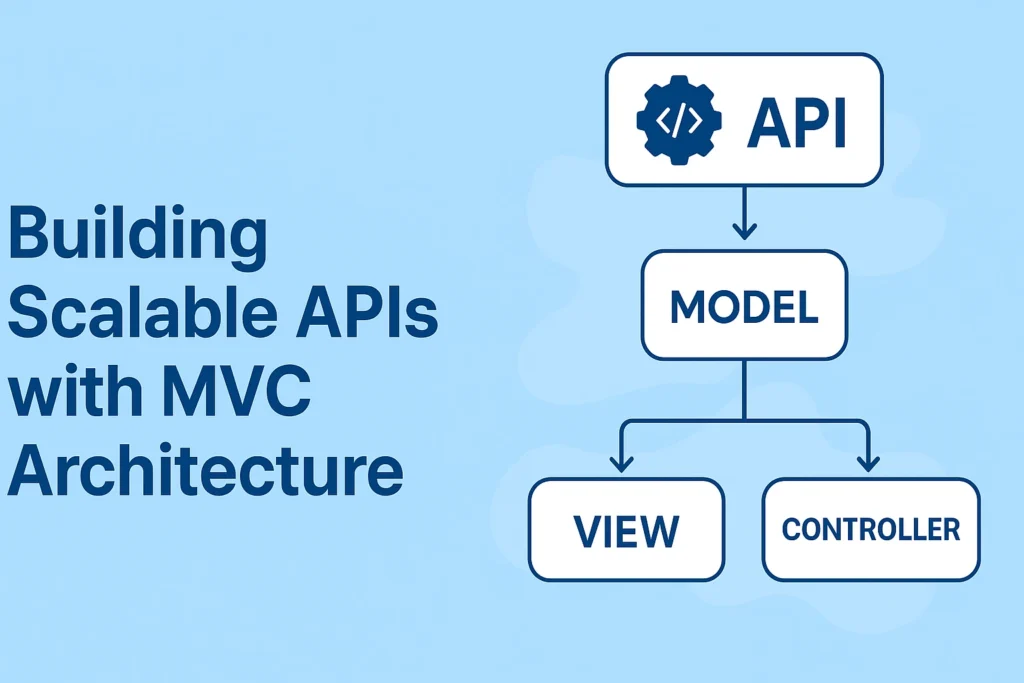
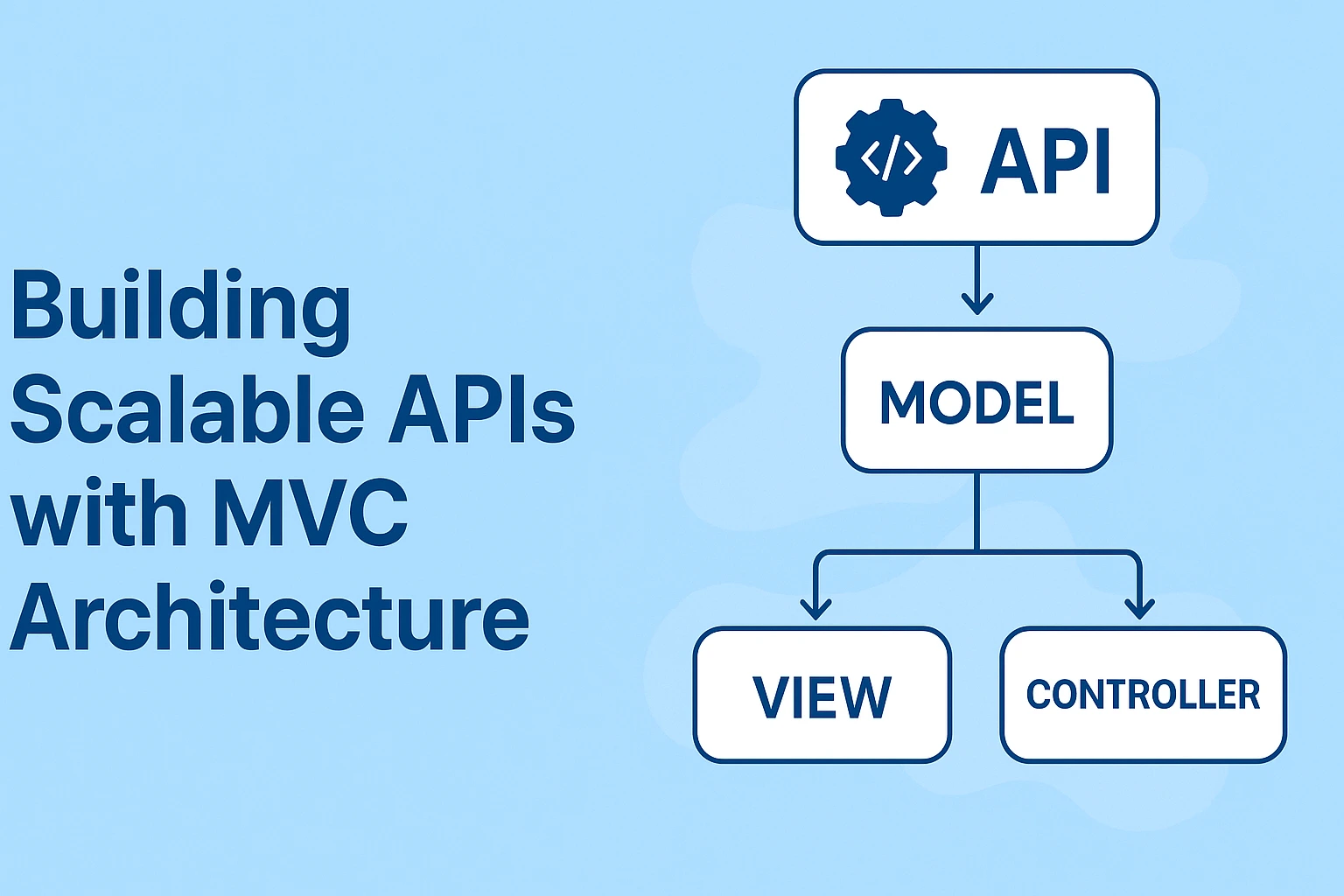
When APIs are built without structure, they quickly become difficult to maintain as projects grow. The MVC pattern prevents this by separating your code into logical layers. The Model manages data, the Controller handles requests and responses, and the Service or View layer contains business logic or presentation details. This separation ensures that APIs remain easy to scale, debug, and extend—even in large, complex systems.

Top Benefits of Using MVC in API Development

1. Clear Separation of Concerns

Each part of the MVC architecture has a single, focused responsibility. The Model deals with database interactions, the Controller handles HTTP requests, and the Service layer executes business rules. This separation reduces confusion, keeps your codebase organized, and makes collaboration between developers more efficient. For instance, a backend developer can focus solely on models while another team member enhances services without stepping on each other’s toes.

2. Scalability & Maintainability

Modern applications need to scale fast. With MVC, scaling is simple—new features can be added without rewriting the entire system. For example, if you need to add payment gateways, you just extend the payment model, write a new controller method, and add corresponding service logic. Existing modules remain untouched, making the entire development process smooth and cost-effective.

3. Easier Testing & Debugging

Testing is a critical part of API development. MVC makes testing easier by isolating concerns. You can write unit tests for models to verify database logic, while integration tests can be run against controllers. This modularity speeds up debugging, reduces human error, and ensures consistent reliability across every release.

4. Faster Onboarding for Developers

With a clean MVC structure, new developers can understand the project layout quickly. Instead of wasting time searching for where business logic or routes are defined, they can immediately navigate to the right folder. This reduces onboarding time and accelerates project delivery.

5. Enhanced Security

Security is crucial for any API. By implementing authentication, authorization, and validation as middlewares within MVC, we ensure that every endpoint is protected. Sensitive business logic is handled in services, while controllers remain lightweight and less prone to vulnerabilities. This layered approach keeps your APIs secure and compliant with industry best practices.

How We Implement MVC in API Projects

At Speqto, our API projects follow a professional structure with clearly defined layers:

  • Models – Represent database schemas and relationships using tools like Sequelize (SQL) or Mongoose (MongoDB).
  • Controllers – Manage request/response cycles. Each controller focuses on a single resource (e.g., user, order, payment).
  • Services – Handle complex business logic, ensuring controllers remain lightweight and readable.
  • Routes – Define clean REST endpoints such as /api/v1/users or /api/v1/orders.
  • Middlewares – Add extra functionality like authentication (JWT), validation, logging, and error handling.
  • Utils – Helper functions for reusability across the project.

A Sample MVC Folder Structure

Here’s a simplified folder structure we commonly use:

/controllers
   userController.js
   orderController.js
/models
   userModel.js
   orderModel.js
/services
   userService.js
   orderService.js
/routes/v1
   userRoutes.js
   orderRoutes.js
/middlewares
   authMiddleware.js
/utils
   responseHandler.js
app.js
index.js

This structure ensures consistency across all projects, making development, debugging, and scaling straightforward.

Real-World Example: Building a User API

Let’s say we’re creating a simple User API:

  • The Model defines fields like name, email, and password.
  • The Controller receives requests such as POST /users or GET /users.
  • The Service handles business logic like hashing passwords before saving to the database.
  • The Middleware ensures only authenticated users can access sensitive endpoints.

This layered approach keeps the project well-structured and ensures that future developers can easily extend functionality without breaking existing code.

Best Practices for MVC-Based APIs

To make the most of MVC, we follow these best practices:

  • Keep controllers lightweight—delegate logic to services.
  • Use DTOs (Data Transfer Objects) for consistent API responses.
  • Centralize error handling with middleware.
  • Organize routes by version (e.g., /api/v1) for backward compatibility.
  • Use environment variables for sensitive configurations.
  • Write automated tests for services and controllers to maintain reliability.

How Our Approach Benefits You

By following the MVC architecture, Speqto delivers APIs that are:

  • Scalable – Easy to extend as your business grows.
  • Maintainable – Clean structure reduces technical debt.
  • Secure – Strong middleware-based authentication and validation.
  • Transparent – Clear folder structure and code organization for better collaboration.
  • Efficient – Faster delivery with fewer bugs and consistent performance.

Conclusion

APIs are the backbone of today’s digital ecosystem, and their success depends on a well-structured foundation. By leveraging the MVC architecture, Speqto ensures that every API is reliable, scalable, and future-ready. Whether you are building a startup MVP or scaling an enterprise platform, our MVC-based approach guarantees long-term stability and growth.

RECENT POSTS

Beyond the Battlefield: Architecting Your Web App with Optimal SSR or CSR Rendering

Beyond the Battlefield: Architecting Your Web App with Optimal SSR or CSR Rendering Gaurav Garg 06 March 2026 In the dynamic landscape of web development, a fundamental architectural decision often dictates the success and user experience of a web application: the choice between Server-Side Rendering (SSR) and Client-Side Rendering (CSR). This isn’t merely a technical […]

How IT Companies Can Win Global Clients in 2026

How IT Companies Can Win Global Clients in 2026   Chirag Verma 06/03/2026 In 2026, the global technology market is more competitive and opportunity-rich than ever before. Businesses across industries are searching for reliable IT partners who can help them innovate, scale, and stay ahead in an increasingly digital world. For IT companies, winning global […]

The Human Side of AI: How HR Leaders Will Shape the Future of Work in 2026

The Human Side of AI: How HR Leaders Will Shape the Future of Work in 2026 Khushi Kaushik 06 march, 2026 Introduction As we step into 2026, the workplace is evolving faster than ever before. Artificial Intelligence, automation, remote work, and digital collaboration tools are transforming how organizations operate. But amid all this innovation, one […]

Socket.IO Security Unveiled: Mastering Authentication & Authorization for Robust Real-time Applications

Socket.IO Security Unveiled: Mastering Authentication & Authorization for Robust Real-time Applications Divya Pal 4 February, 2026 In the dynamic landscape of modern web development, real-time applications have become indispensable, powering everything from chat platforms to collaborative editing tools. At the heart of many of these interactive experiences lies Socket.IO, a powerful library enabling low-latency, bidirectional […]

Prisma ORM in Production: Architecting for Elite Performance and Seamless Scalability

Prisma ORM in Production: Architecting for Elite Performance and Seamless Scalability Shubham Anand 16 February 2026 In the rapidly evolving landscape of web development, database interaction stands as a critical pillar. For many modern applications, Prisma ORM has emerged as a powerful, type-safe, and intuitive tool for interacting with databases. However, transitioning from development to […]

POPULAR TAG

POPULAR CATEGORIES