


Loading...

Building Real-Time Dashboards for Operations and Compliance Teams: What Actually Works

A few months back, we sat in a review call with the ops head of a mid-sized NBFC. His complaint was simple: “By the time my team sees a problem in the report, the problem is already three hours old.” His compliance officer, sitting right next to him, had a similar issue — she was pulling data from four different systems every morning just to check if any transaction had breached a regulatory threshold overnight.

This is not a rare story in BFSI. Most operations and compliance teams still run on end-of-day reports, batch jobs, and Excel exports. The cost of that delay isn’t abstract — it shows up as missed SLA breaches, delayed fraud detection, and compliance officers finding out about a limit breach the next morning instead of the same minute.

At Speqto, we’ve built real-time dashboards for a few BFSI and fintech clients now, and the patterns that actually work are fairly consistent. Here’s what we’ve learned building these systems end to end — not just the dashboard UI, but the data pipeline behind it.

Start with “real-time for what,” not “real-time for everything”

Every client initially says they want “everything live.” That’s expensive and mostly unnecessary. For the NBFC mentioned above, we sat down and split their metrics into three buckets:

  • Sub-minute critical:</strong ) transaction failures, payment gateway downtime, fraud flags — these needed to update within seconds.
  • Near real-time (5-15 min): collections status, disbursement queue health, agent productivity.
  • Daily/batch: regulatory MIS, portfolio quality reports, audit trail summaries.

Once you separate these, the architecture becomes much simpler and cheaper. You don’t need a Kafka-based streaming pipeline for numbers that only need to refresh every 15 minutes.

The pipeline matters more than the dashboard

Clients usually come to us asking for “a dashboard” but the real work is in getting clean, consistent data flowing from core banking systems, payment gateways, KYC vendors, and loan management systems into one place without breaking anything upstream.

For a payments client we worked with, transaction data lived in a PostgreSQL core system, fraud scores came from a third-party API, and reconciliation data sat in a legacy Oracle system updated via nightly cron jobs. We used Debezium for change-data-capture on Postgres, pushed events into Kafka, and let a lightweight stream processor (we used Apache Flink here) join fraud scores with transaction events in near real time. The dashboard itself — built on a Grafana-plus-custom-React stack — was almost the easy part once this pipeline was solid.

Design for the person, not the metric

An ops manager and a compliance officer looking at the same transaction data need completely different views. In one project for a lending platform, we built:

  • An ops view showing loan disbursement funnel stages with color-coded SLA breaches, refreshed every 30 seconds.
  • A compliance view showing AML flag counts, PEP list hits, and threshold breaches against RBI/FIU reporting limits, with an audit trail attached to every number so nothing is a “black box” during an audit.
  • A leadership view with rolled-up KPIs and trend lines, deliberately not real-time, because leadership doesn’t need to react to a single failed transaction.

This role-based separation reduced dashboard fatigue significantly. When everyone sees the same crowded screen, nobody actually watches it.

Alerts are more important than screens

A dashboard that people have to stare at all day isn’t real-time monitoring — it’s a chore. The real value comes from alerting logic layered on top: threshold-based alerts pushed to Slack or MS Teams, escalation rules if an alert isn’t acknowledged in X minutes, and suppression logic so one root-cause issue doesn’t trigger fifty duplicate alerts. For the NBFC client, we cut alert noise by nearly 70% just by adding basic deduplication and severity tiers before the dashboard project was even “done.”

Compliance needs immutability, not just visibility

One thing generic BI tools often miss for BFSI: compliance dashboards need an audit trail on the data itself, not just on user access. Every number a compliance officer sees during an RBI or SEBI audit should be traceable back to the source event, timestamped, and immutable. We typically append an event log (often just an append-only table or a separate audit stream) alongside the live dashboard data specifically for this reason.

What we’d tell any BFSI leader starting this

  • Don’t buy a BI tool license before mapping your data sources and latency needs.
  • Budget separately for the pipeline and the dashboard — the pipeline is usually 70% of the effort.
  • Build role-based views from day one; retrofitting this later means rebuilding.
  • Treat alerting as a first-class feature, not an afterthought.

Real-time dashboards aren’t really about pretty charts — they’re about closing the gap between “something went wrong” and “someone knew about it.” For operations and compliance teams in BFSI, that gap is where risk lives. At Speqto, this is the kind of engineering problem we enjoy solving because the impact is immediate and measurable — fewer breaches missed, faster reconciliation, cleaner audits.

If your team is still exporting yesterday’s data to figure out today’s problems, it might be time for a conversation.

RECENT POSTS

Reducing Loan Processing Time Through Workflow Automation: What Actually Works

If you’ve spent any time in lending operations, you already know the real cost of a slow loan cycle isn’t just customer frustration — it’s lost business. A borrower who waits 10 days for approval has usually applied with two other lenders in the meantime. We’ve seen this play out repeatedly with our BFSI clients […]
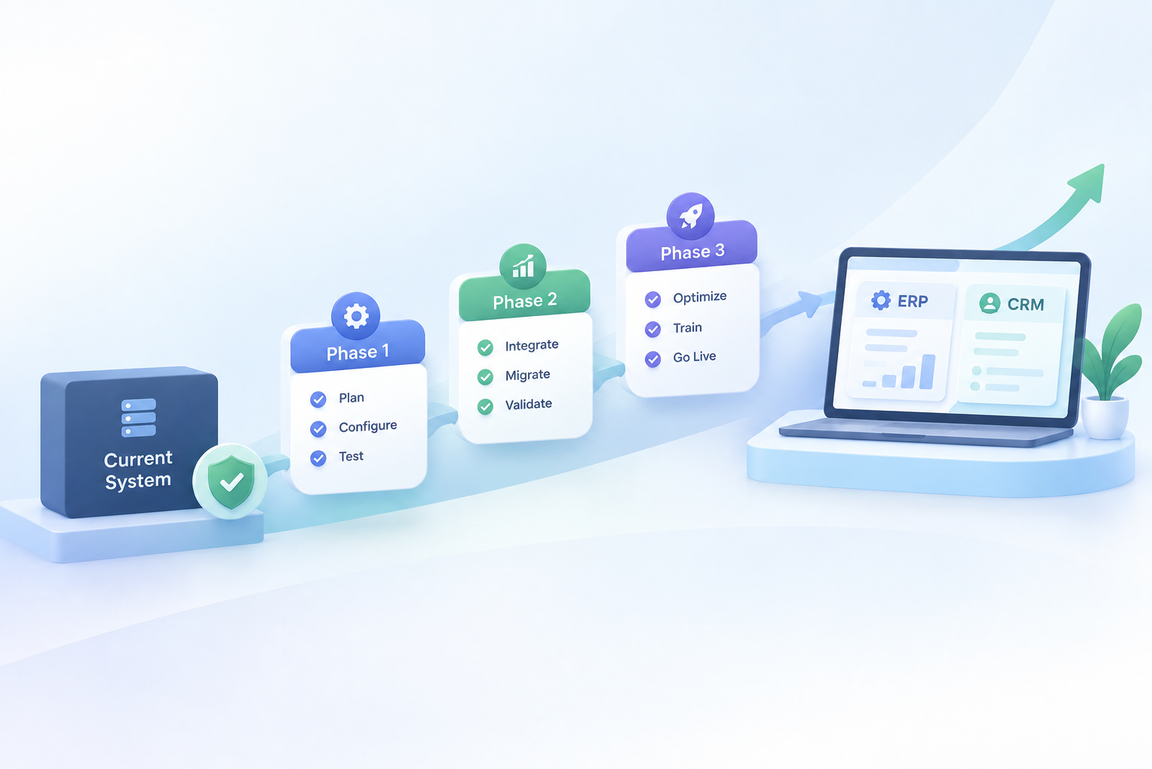

How to Plan a Phased ERP or CRM Implementation Without Breaking What Already Works

Every BFSI or fintech leader we’ve worked with has heard the same horror story at least once — a bank or NBFC switches on a new core system overnight, and for three weeks nobody can process loan disbursements properly. That’s the risk of a “big-bang” ERP or CRM rollout, and it’s exactly why phased implementation […]

Why Microservices Architecture Reduces Long-Term Maintenance Cost (A BFSI Perspective)

Every BFSI and fintech leader we’ve worked with at Speqto Technologies eventually asks us the same question: “Our monolith works fine today, so why should we spend money breaking it apart?” Fair question. The honest answer is — you shouldn’t do it for today. You do it for the three years after today, when your […]

Building Customer-Facing Portals for Financial Institutions: What Actually Works

Over the last few years, our team at Speqto Technologies has built portals for NBFCs, cooperative banks, insurance brokers, and a couple of wealth management firms. One thing that keeps surprising clients: the hardest part is rarely the UI. It’s getting core banking integrations, compliance workflows, and support escalation to work together without the whole […]

How AI Can Improve Fraud Detection in Banking Systems: What Actually Works

Most banks we talk to aren’t short on fraud rules. They have hundreds of them — thresholds on transaction amount, geography mismatches, velocity checks, blacklisted IFSC codes. The problem isn’t the lack of rules; it’s that fraudsters have learned to operate just below every threshold. That’s where AI earns its place, not as a buzzword, […]

POPULAR TAG

POPULAR CATEGORIES